
Last updated August 25, 2026
Free on-site gate assessment - hinges, posts, and your LiftMaster or Nice gate operator checked before anything is quoted
The assessment is free and the quote is the invoice.
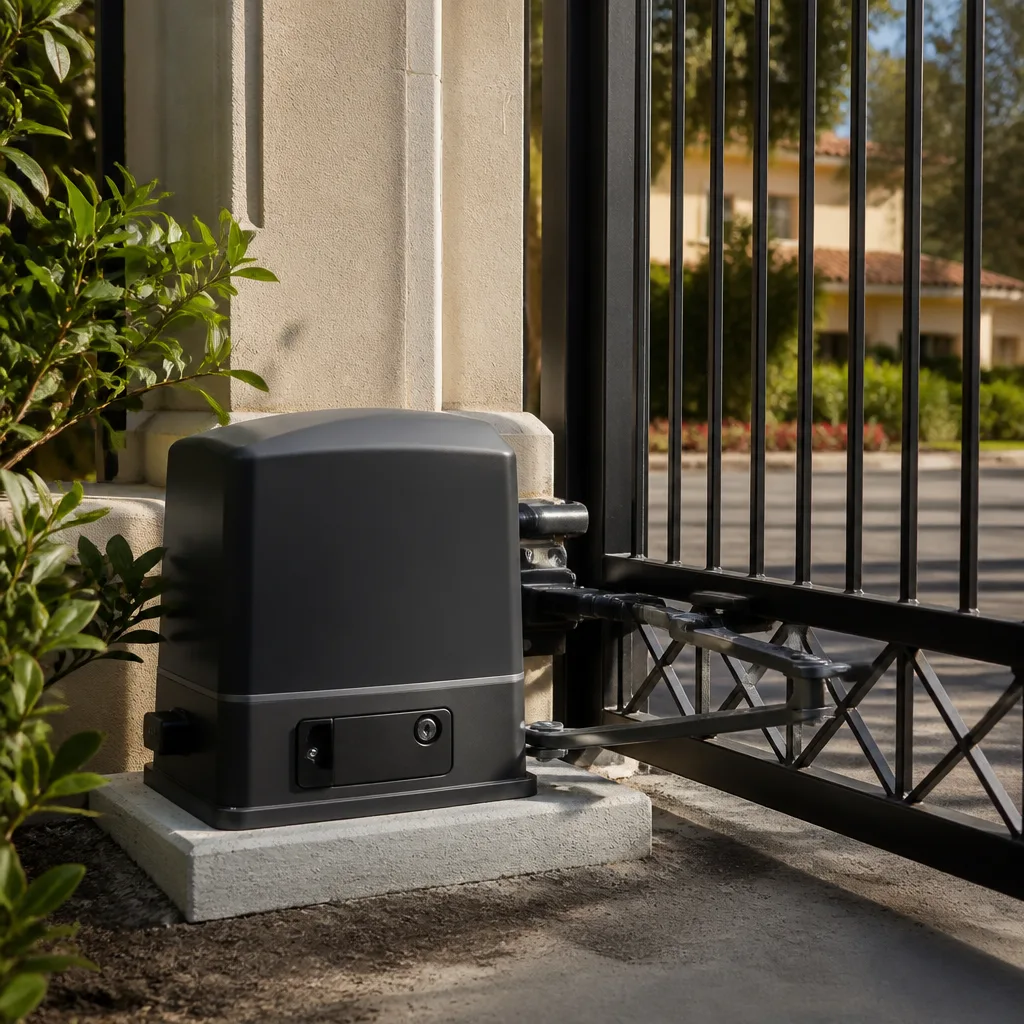
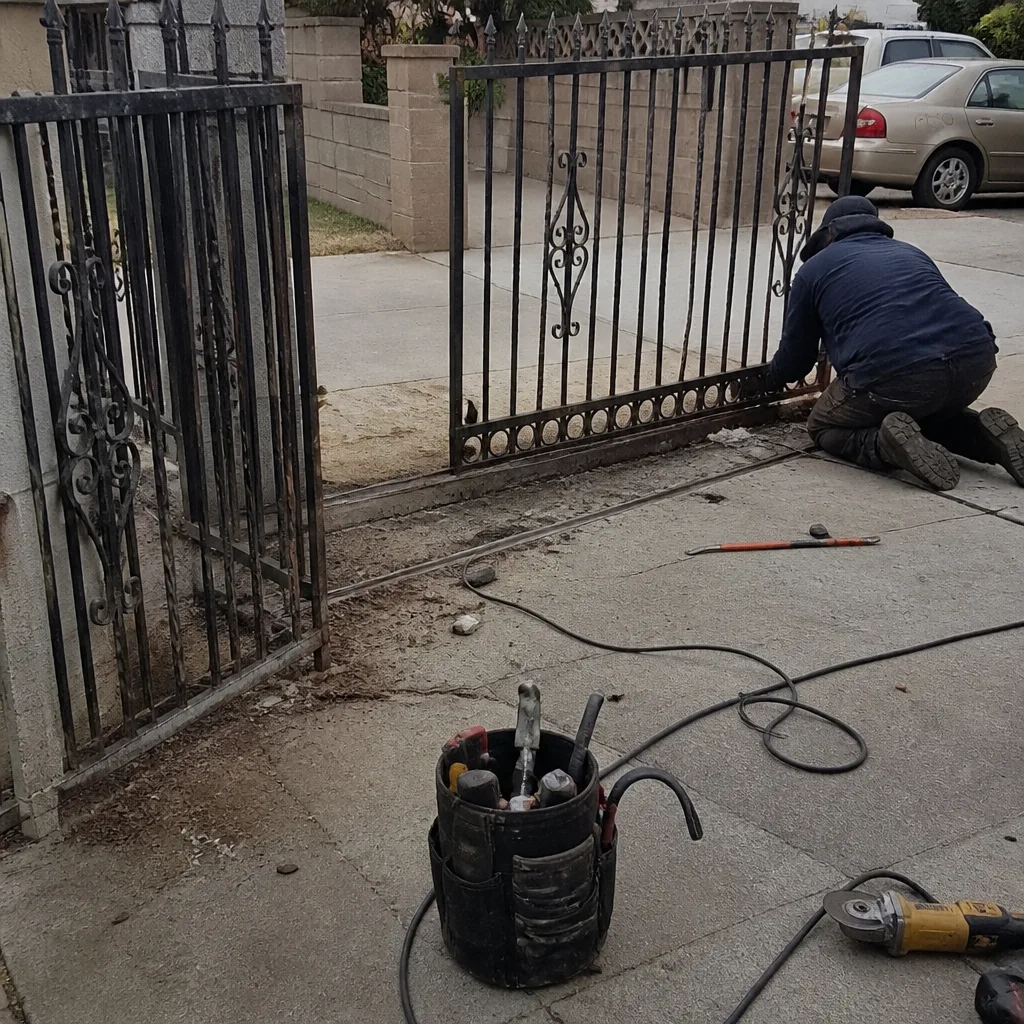 Before
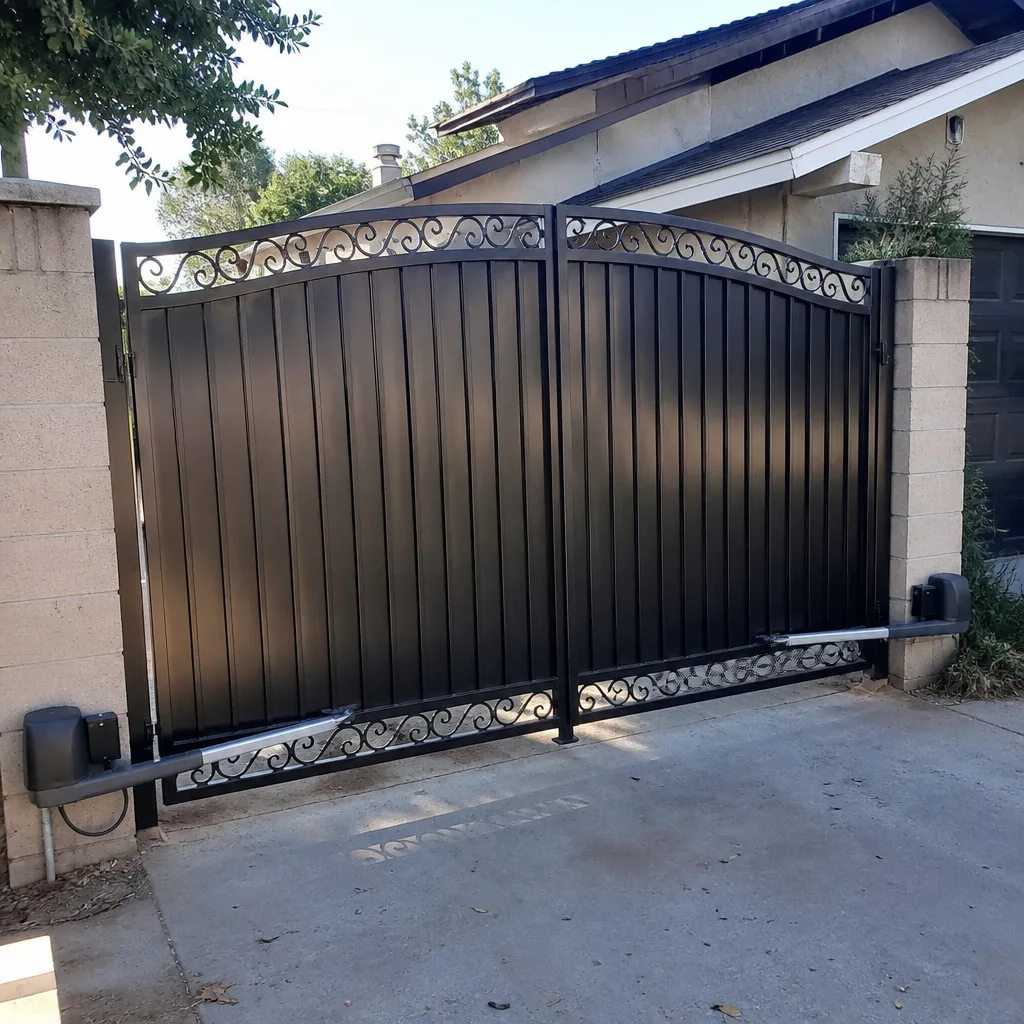 After
After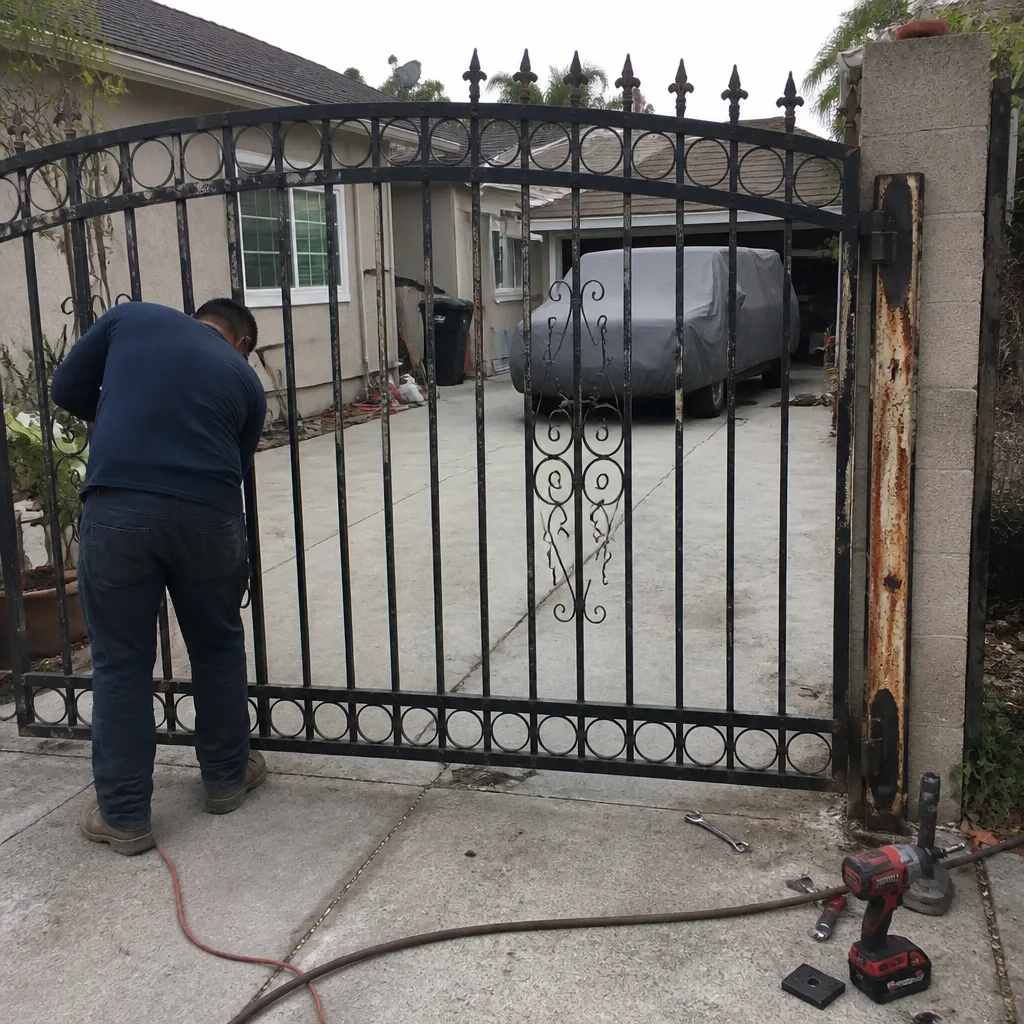 Before
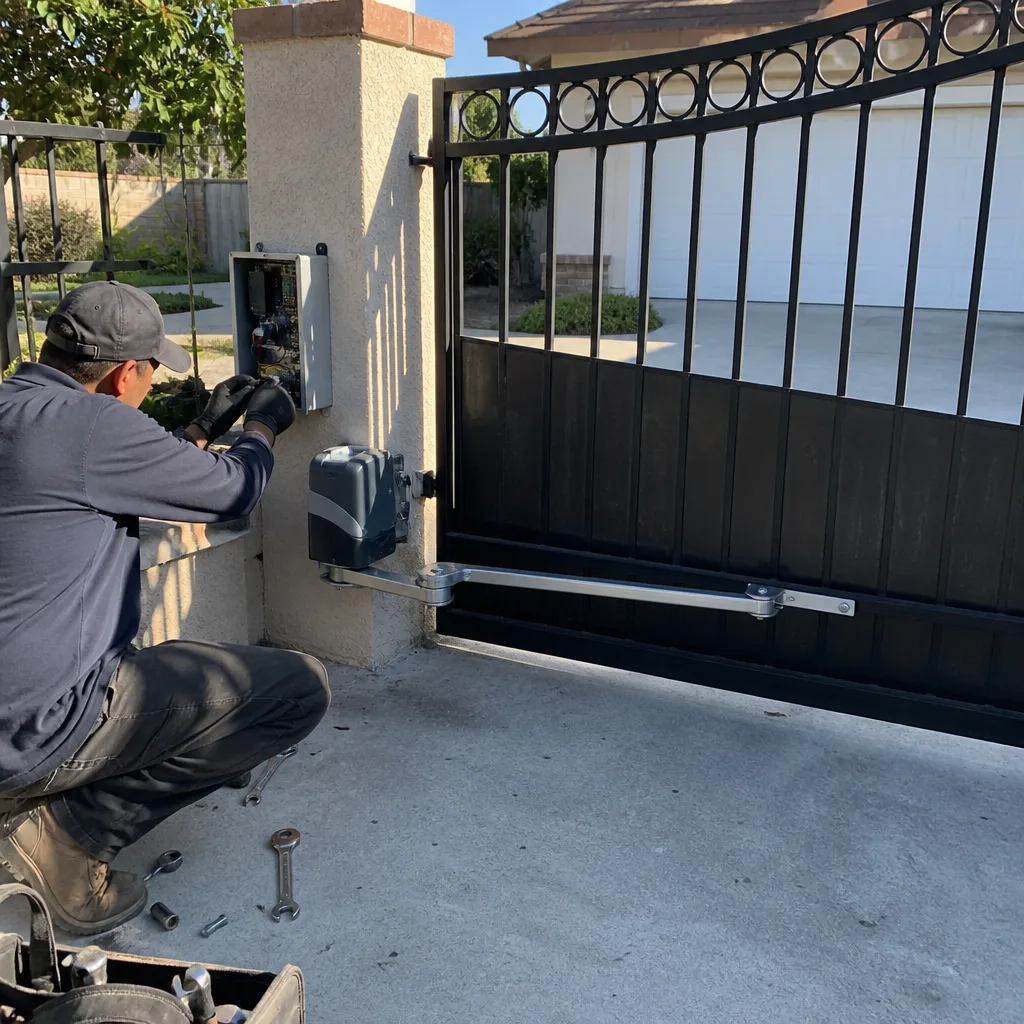 After
After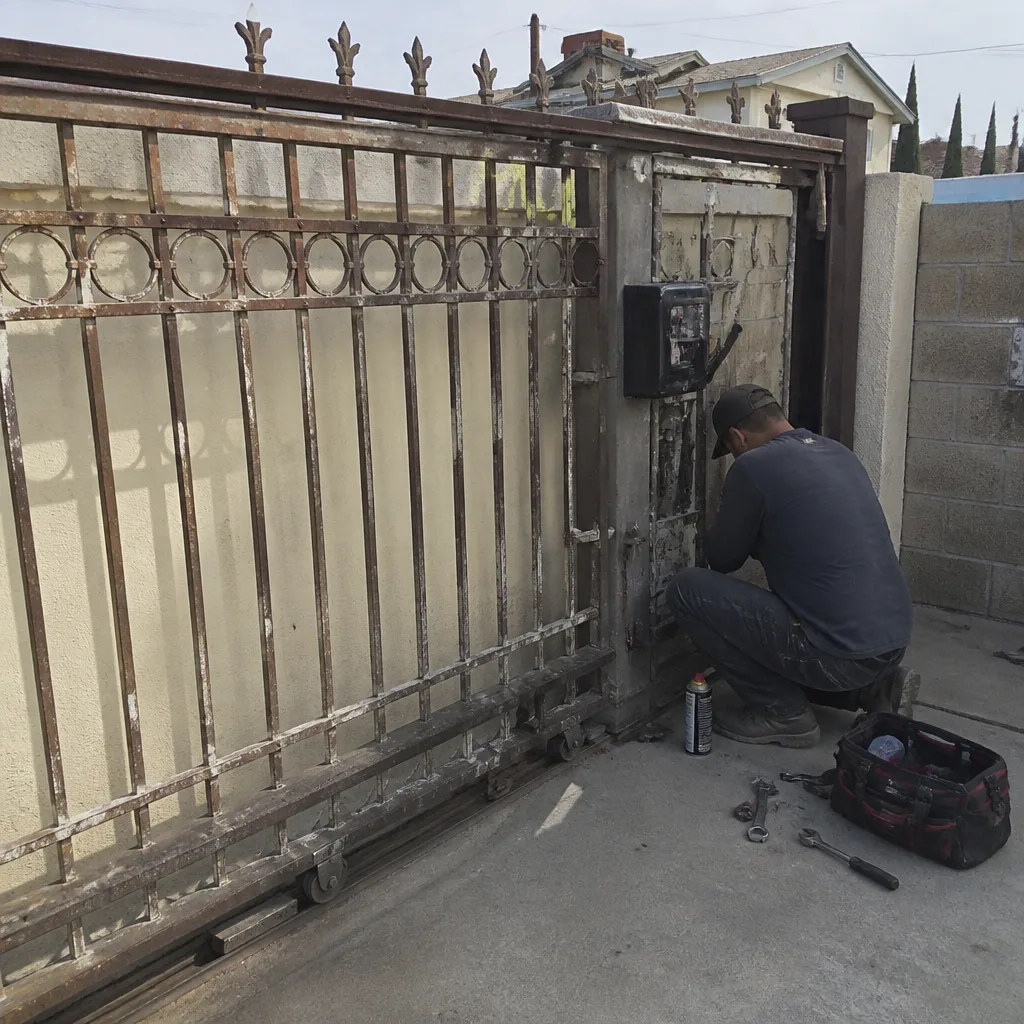 Before
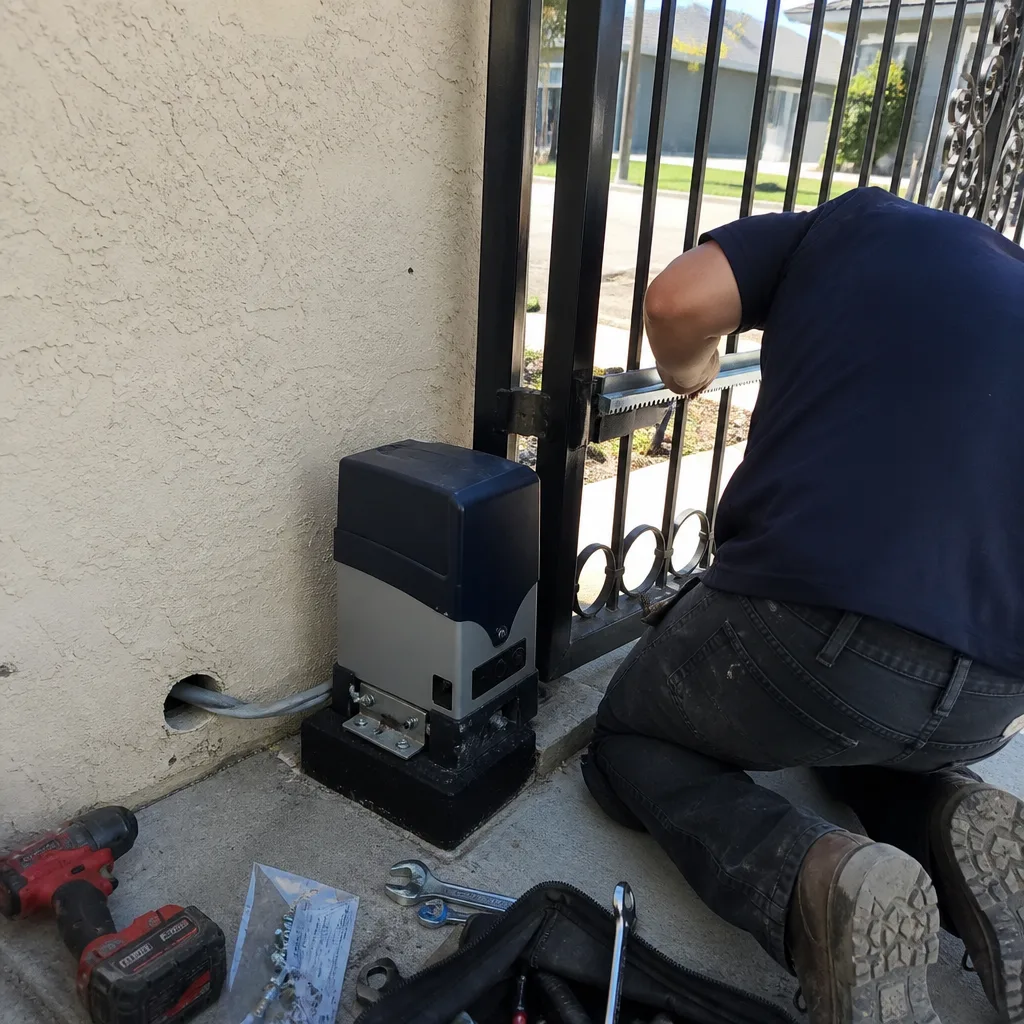 After
AfterDIY vs Professional Gate Repair: The El Monte Homeowner’s Decision Guide
Here’s a number that surprises most El Monte homeowners: roughly half of the gate repair calls we take involve a problem made worse by an earlier DIY attempt.
It’s usually the same story. A homeowner notices the gate dragging, grabs a wrench, adjusts something, and the gate works for a week. Then the motor burns out, or a hinge cracks, or the whole frame sags. What would have been a $180 fix becomes a $1,400 replacement. This guide walks you through what’s genuinely doable on your own, what absolutely is not, and how to tell the difference before you touch a single bolt.
If you’re reading this because your gate is currently stuck open, stuck closed, or making a sound like gravel in a blender, skip ahead to the section on emergency situations. If you’re planning ahead, read straight through.
We’re Ironworks Gate Co., based right here in El Monte, and we’ve been repairing driveway and estate gates for over 42 years. We wrote this guide because we’d rather see you spend ten minutes reading than spend a thousand dollars fixing a mistake.
Quick Answer
Most El Monte homeowners can safely handle cosmetic upkeep (painting, lubricating hinges, cleaning the track) and diagnostics (identifying what’s wrong). But when the problem involves gate springs, opener motors, electrical wiring, welded joints, or a gate that has come off its track, professional repair is the safer and usually cheaper choice. A wrong DIY fix on a gate opener or spring assembly routinely turns a sub-$200 repair into a $1,000-plus replacement.
Table of Contents
- Understand Your Gate Before You Touch It
- What’s Genuinely Safe to DIY in El Monte
- What You Should Never DIY
- How to Diagnose a Gate Problem Without Making It Worse
- DIY vs Professional: A Real Cost Comparison for El Monte
- El Monte-Specific Factors: Climate, Soil, and Code
- Common Mistakes to Avoid
- When to Call a Professional
- Frequently Asked Questions
- The Bottom Line
Understand Your Gate Before You Touch It
A driveway gate in El Monte is not one machine. It’s four systems working together, and most DIY failures happen because someone fixed the wrong system. The four systems are:
- The structure: posts, frame, hinges, and the gate leaf itself. These carry weight and resist wind.
- The movement system: wheels, track, or swing hinges that let the gate travel.
- The operator: the motor and gearbox that move the gate. This is a LiftMaster, FAAC, BFT, or Mighty Mule unit in most El Monte driveways.
- The safety and control system: photo eyes, loop detectors, keypads, remotes, and the control board that ties them together.
Here’s the thing: a sagging gate that drags on the ground looks like a structural problem, but it may have been caused by a failing opener that reversed direction one too many times. A gate that won’t open may look like a motor problem, but it may be a dead battery in the keypad or a photo eye knocked out of alignment by a gardener’s leaf blower.
We’ve seen El Monte homeowners replace a perfectly good $600 opener because a $4 capacitor on the control board failed. We’ve also seen homeowners spend a weekend rebuilding a gate frame that was fine, while ignoring the wheel that had seized and was scraping the track flat.
Before you buy parts or schedule a repair, spend fifteen minutes identifying which system is actually failing.
What’s Genuinely Safe to DIY in El Monte
We’re not here to tell you every repair requires a technician. There are several maintenance and repair tasks an El Monte homeowner can do safely with basic tools and patience.
1. Lubrication
This is the single highest-value DIY task on any gate. A dry hinge or roller makes the opener work harder, which shortens its life. Use a white lithium grease on hinges and a silicone spray on the track and wheels. Do this every six months, and again before the Santa Ana winds pick up in the fall.
Don’t use WD-40. It’s a solvent, not a lubricant. It will strip the existing grease and make the problem worse within weeks.
2. Track and Wheel Cleaning
El Monte’s sandy soil and leaf litter collect in slide gate tracks. Use a garden hose, a stiff brush, and a shop vacuum to clear the track. Check the wheels for debris wrapped around the axles. A clean track prevents most dragging and jerking complaints.
3. Photo Eye Realignment
If your gate reverses every time it closes, the photo eyes are the likely culprit. They’re the two small sensors mounted low on either side of the gate opening. Check that they’re pointing at each other and nothing is blocking the beam. Wipe the lenses with a dry cloth. This fixes about a third of “my gate won’t close” calls.
4. Remote and Keypad Battery Replacement
A dead remote battery is the most common “opener failure” we get called for. If the gate works from the wall button but not the remote, replace the battery in the remote first. If it works from the remote but not the keypad, check the keypad’s battery or solar cell.
5. Cosmetic Work
Painting, rust removal, and replacing a gate’s handle or latch are all reasonable DIY tasks. Use a rust converter before repainting any bare metal. In El Monte’s climate, surface rust spreads quickly if left untreated.
These five categories cover most of what a homeowner can safely do without risking injury or making the repair more expensive. Everything else falls into the next section.
What You Should Never DIY
Some gate repairs are dangerous, and some are simply too expensive to risk getting wrong. Here’s where to draw the line.
Gate Springs and Tension Assemblies
Slide gates and many swing gates use heavy torsion or extension springs to balance the gate’s weight. These springs are under constant tension. When one lets go, it can break bones, remove fingers, or worse. We have seen spring failures in El Monte garages, and the same physics applies to driveway gates. Do not attempt to adjust, replace, or remove a gate spring without the proper winding tools and experience. This is the single most dangerous component on any gate system.
Opener Motor and Gearbox Work
A modern gate opener is an electromechanical system with tightly specified tolerances. Opening the gearbox or replacing the motor requires specific knowledge of the brand’s design quirks. A LiftMaster gearbox differs from a FAAC or BFT. Installing a replacement part incorrectly can ruin the new part and the gears it touches. We regularly see homeowners who bought a $150 replacement gear and installed it themselves, only to strip it within a month because the torque limiter wasn’t set correctly.
Electrical Wiring and Control Boards
Gate openers in El Monte run on either 110V or low-voltage DC, sometimes both in the same cabinet. A wrong connection can fry a control board, start a fire, or energize the gate frame. If you don’t know how to read a wiring diagram, don’t open the electrical cabinet.
Welding
Cracked gate frames and broken hinges need welding. This is not a job for a homeowner with a YouTube tutorial and a borrowed welder. A bad weld on a gate hinge can fail catastrophically while the gate is moving. We have seen gates fall off their hinges in El Monte driveways. Fortunately, no one was standing under them.
A Gate Off Its Track
If your gate has jumped its track or fallen off its roller, the gate is no longer stable. A gate of that size weighs hundreds of pounds. Trying to lift it back into place with a car jack or a group of neighbors is a recipe for a crushed hand or a bent frame. Call a professional before attempting anything.
Any Repair on a Gate Under Warranty
Most gate opener manufacturers will void the warranty if the unit has been opened by anyone other than a certified technician. If your opener is less than three years old, check the warranty before you touch it.
How to Diagnose a Gate Problem Without Making It Worse
Diagnosing is safe and useful. It saves time when you call a professional, and it helps you describe the problem accurately. Here’s the step-by-step process we use, adapted for a homeowner.
Step 1: Listen Before You Look
Stand near the gate and have someone cycle it open and closed. Listen. A grinding sound from the motor usually means a gear problem. A squealing sound from the gate leaf means dry hinges or rollers. A clicking sound with no movement means a bad start capacitor or a jammed gear. A slamming sound at the end of travel means the limit switch is misadjusted.
Write down what you hear. This single piece of information helps more than any photo.
Step 2: Isolate the System
Disconnect the opener (most have a release handle or lever) and push the gate by hand. If the gate moves freely, the problem is in the opener or controls. If the gate is difficult to move, the problem is structural or mechanical: hinges, wheels, track, or a bent frame.
This test alone narrows the problem by half.
Step 3: Check Power and Sensors
Confirm the opener has power. Check the breaker. Check the GFCI outlet if the opener plugs into one. Then check the photo eyes. If the opener has power but does nothing, and the photo eyes are clean and aligned, the problem is likely in the control board or motor.
Step 4: Document Everything
Take photos of the gate, the opener, the track, the hinges, and the control board. Take a photo of the model number on the opener. This matters when you call for an estimate. Knowing the brand (LiftMaster, Mighty Mule, FAAC, BFT) helps the technician bring the right parts on the first visit.
DIY vs Professional: A Real Cost Comparison for El Monte
Here’s an honest look at what repairs actually cost in El Monte, whether you do them yourself or call a professional. These are current market ranges we see every week, not national averages from a website.
DIY Costs vs Professional Costs
- Lubrication and cleaning: $15 for materials, 30 minutes of your time. Professional tune-up: $89. Verdict: DIY.
- Remote battery replacement: $5 for a battery. Professional visit: $49-$79. Verdict: DIY.
- Photo eye alignment: $0, 10 minutes. Professional visit: $69-$99. Verdict: DIY, after you’ve cleaned the lenses.
- Hinge replacement (single swing gate): $40-$80 for parts, 2-3 hours, plus risk of misalignment. Professional: $180-$340 including the hinge. Verdict: Professional, unless you have experience with gate alignment.
- Slide gate wheel replacement: $25-$60 for a wheel, but the gate must be jacked and supported safely. Professional: $150-$300. Verdict: Professional for most homeowners.
- Opener gear or capacitor replacement: $30-$120 for parts, but requires disassembly and recalibration. Professional: $200-$450. Verdict: Professional. The calibration is the part that matters.
- Control board replacement: $75-$200 for a board, but programming and wiring are exacting. Professional: $300-$600 including board and labor. Verdict: Professional.
- Full gate replacement (standard 12-16 ft driveway): Professional only: $2,800-$7,500 installed, depending on material and automation. Verdict: There is no DIY version of this.
The Hidden Costs of DIY
The prices above are just parts. The real cost of DIY repair includes the mistakes. We repaired a gate in the River East neighborhood of El Monte last spring where the homeowner had replaced a slide wheel himself but installed it with the wrong clearance. The wheel bound against the track, the motor drew excessive current, and the control board fried. The homeowner paid $180 for the board, $45 for the wheel, and then $480 for us to install both correctly. The professional repair would have been $260.
DIY is not cheaper when it’s done wrong.
El Monte-Specific Factors: Climate, Soil, and Code
El Monte has specific conditions that affect gate repair, and they don’t show up in generic online advice.
Climate and Corrosion
El Monte sits in the San Gabriel Valley’s warm-summer Mediterranean zone. That means dry heat for months, then seasonal rain. The heat accelerates grease breakdown on gate hinges and opener gears. The seasonal rain, combined with morning condensation, promotes corrosion on bare metal. Gates in El Monte that are not lubricated twice a year develop dry-hinge squeaks and opener strain faster than gates in coastal communities where humidity is more constant.
Soil Movement
Parts of El Monte are built on alluvial soil from the San Gabriel River and Rio Hondo watersheds. Soils with high clay content expand and contract with moisture. Over decades, this movement shifts gate posts and throws gate alignment out of square. A gate that closes perfectly in July may drag in December, not because the gate changed but because the posts did. Homeowners who have lived in El Monte for twenty or more years often notice this seasonal cycle.
Gate Safety Standards
California has strict automatic gate safety standards that exceed many other states. UL 325 compliance is required for automatic gate operators. Gates must have properly functioning entrapment protection: photo eyes, reverse mechanisms, and appropriate clearance at pinch points. If you’re installing a new opener or modifying an existing gate’s controls, the work must meet these standards. A DIY opener installation that ignores UL 325 requirements is not just a code violation; it’s a genuine safety hazard for children and pets.
Local Market Realities
El Monte is a city of largely single-family homes with driveways built in the 1950s through 1980s. Many of those driveways have gates that are now 30 to 50 years old. The gate frames are often still sound - wrought iron holds up well in this climate - but the openers may be on their second or third replacement. Some of those openers are obsolete brands with no remaining parts support. In those cases, the right repair is an opener replacement, and the right choice is a current-generation unit from a brand with local service support, like LiftMaster or FAAC.
Common Mistakes to Avoid
- Adjusting springs without proper tools. Gate springs carry enough tension to cause serious injury. Even if nothing breaks, an incorrectly adjusted spring changes the gate’s balance and destroys the opener over time.
- Using WD-40 as a lubricant. It dissolves the grease that was there and leaves the parts dry. Use white lithium grease on hinges and silicone spray on tracks.
- Ignoring a noisy gate. A squeak is not harmless. Every squeak is metal grinding against metal. Left alone, a squeaky hinge becomes a cracked weld, and a cracked weld becomes a gate on the ground.
- Forcing a gate that’s stuck. If the gate binds and you keep pressing the remote button, the opener will overheat and burn out. One moment of impatience has cost many El Monte homeowners a $600 opener.
- Replacing the opener without checking the gate. If the gate is heavy to push by hand, a new opener will fail prematurely. The gate must move freely on its own before any opener can work properly.
- Buying the cheapest replacement part online. A no-name control board for a LiftMaster opener is a gamble. We’ve seen boards that arrived dead, boards that failed in weeks, and boards that didn’t match the wiring harness. Buy OEM or proven aftermarket parts.
- Drilling into the gate frame for a camera or keypad. Every hole you drill in a steel gate is a future rust point and a structural weak spot. If you’re mounting accessories, use clamp brackets, not sheet-metal screws.
When to Call a Professional
Call a professional when the gate is off its track, when a spring has visible damage or has snapped, when the opener smells hot or makes grinding sounds, when the control board shows burn marks, when the gate has fallen out of square, or when anything on the gate requires welding.
Call a professional also when you’ve already tried a DIY fix and the problem returned. A recurring problem is a symptom of an underlying issue that wasn’t addressed, and each recurrence is doing more damage.
Ironworks Gate Co. offers free estimates in El Monte. We’ll diagnose the problem, explain what’s wrong in plain terms, and give you a written price before any work starts. Call (424) 300-8579.
Frequently Asked Questions
Most gate repairs in El Monte run between $150 and $600 depending on the component. A hinge replacement is typically $180 to $340. An opener gear or capacitor replacement runs $200 to $450. A full control board replacement can reach $600. Every repair we quote is priced upfront and agreed to before any work begins. Call (424) 300-8579 for an exact quote on your gate.
In most cases, yes. We complete the majority of gate repairs in a single visit because our technicians carry parts for the major brands including LiftMaster, FAAC, BFT, and Mighty Mule. If you call before early afternoon, we can usually get a technician to your El Monte driveway the same day.
You can, but you shouldn’t. A grinding sound from the opener indicates gear wear, and every cycle makes the damage worse. Continued use will eventually strip the gears completely and turn a $250 repair into a $600 replacement. Stop using the gate and call for service.
A full installation includes removal and disposal of the old gate, new gate fabrication or a pre-built gate of your chosen design, new hinges and posts if needed, opener installation, safety sensor setup, and programming of your remotes and keypads. Every installation includes our 90-Day Done Right Promise in writing. Free estimates are available by calling (424) 300-8579.
Yes. We run the power, install the photo eyes and other entrapment protection devices, and verify UL 325 compliance on every automatic gate we service or install. We never leave a job with safety equipment disconnected or bypassed.
It depends on the condition of the steel. Wrought iron and steel gates from the 1970s and 1980s are often better built than gates made today. If the frame is sound and the welds are intact, a new opener, new hinges, and fresh paint can make a 40-year-old gate close like the day it was hung. We’ll tell you honestly which direction makes more sense for your gate. Call (424) 300-8579 and we’ll look at it.
The Bottom Line
DIY gate repair in El Monte makes sense for the simple things: lubrication, cleaning, battery replacement, and sensor alignment. These are low-risk, low-cost, and genuinely doable in an afternoon.
Beyond that, the risk climbs quickly. Springs, openers, electrical systems, welding, and structural work are dangerous to do wrong and expensive to fix. Every month we repair gates in El Monte where a DIY attempt added hundreds of dollars to the final bill.
The smartest homeowner decision is usually this: do the diagnosis yourself, do the simple maintenance yourself, and call a professional for anything with springs, motors, wiring, or welds. That’s the approach that keeps both your gate and your hands intact.
Written by Victor Salinas, Owner at Ironworks Gate Co., serving El Monte since 2013.