
Last updated August 25, 2026
Free on-site gate assessment - hinges, posts, and your LiftMaster or Nice gate operator checked before anything is quoted
The assessment is free and the quote is the invoice.
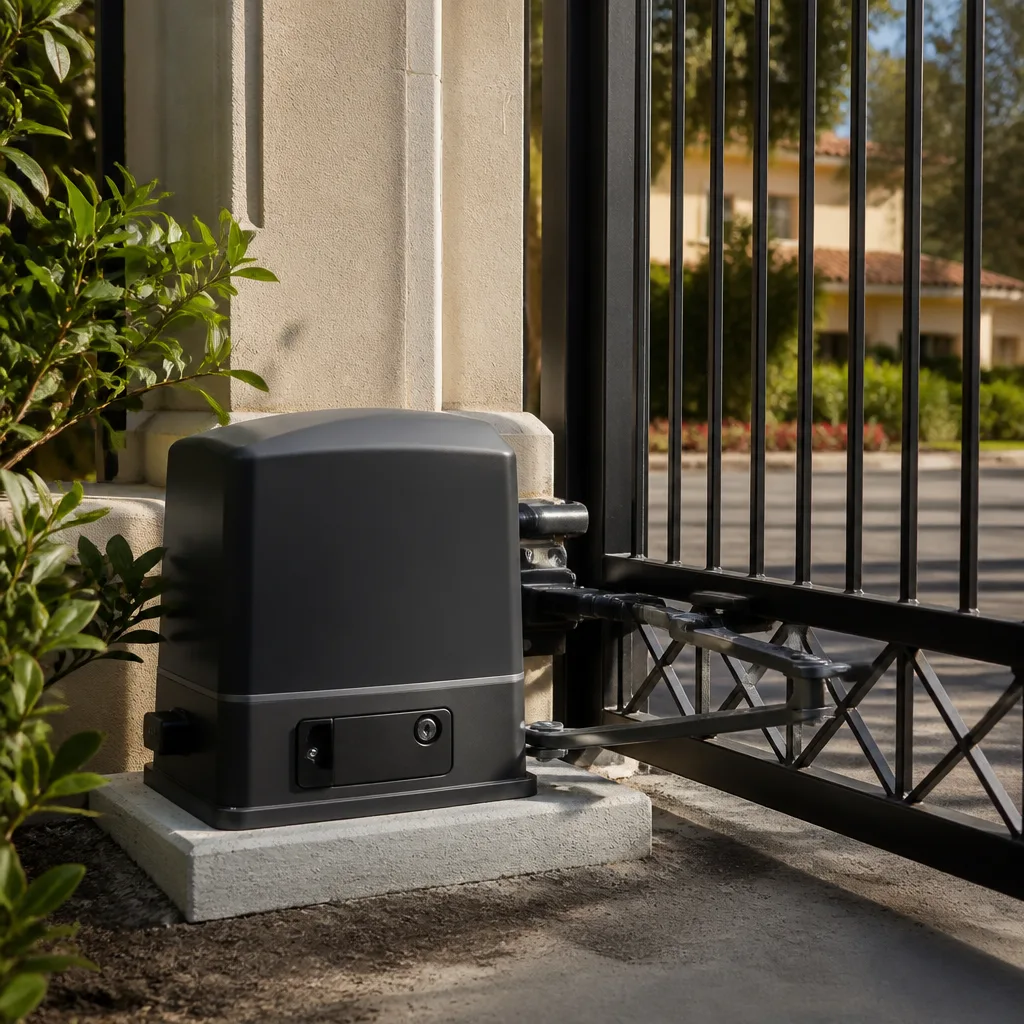
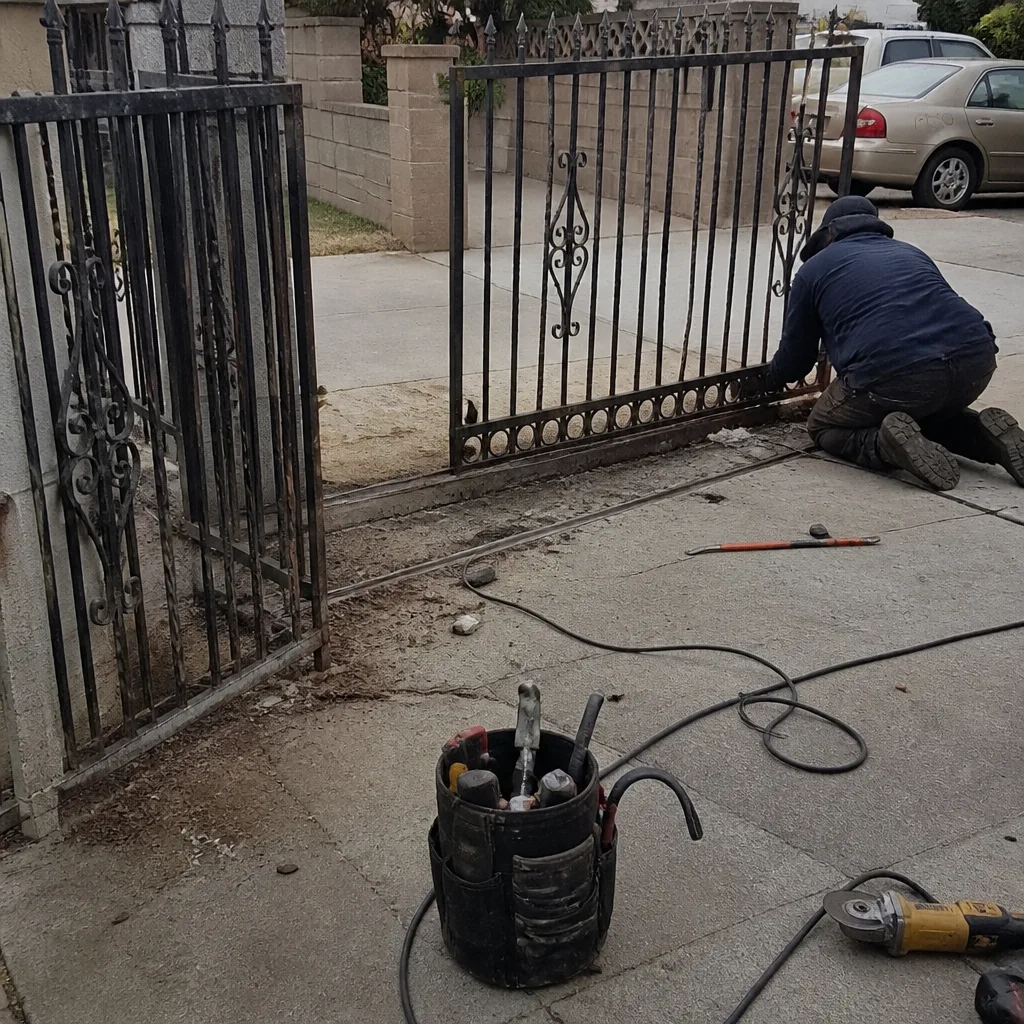 Before
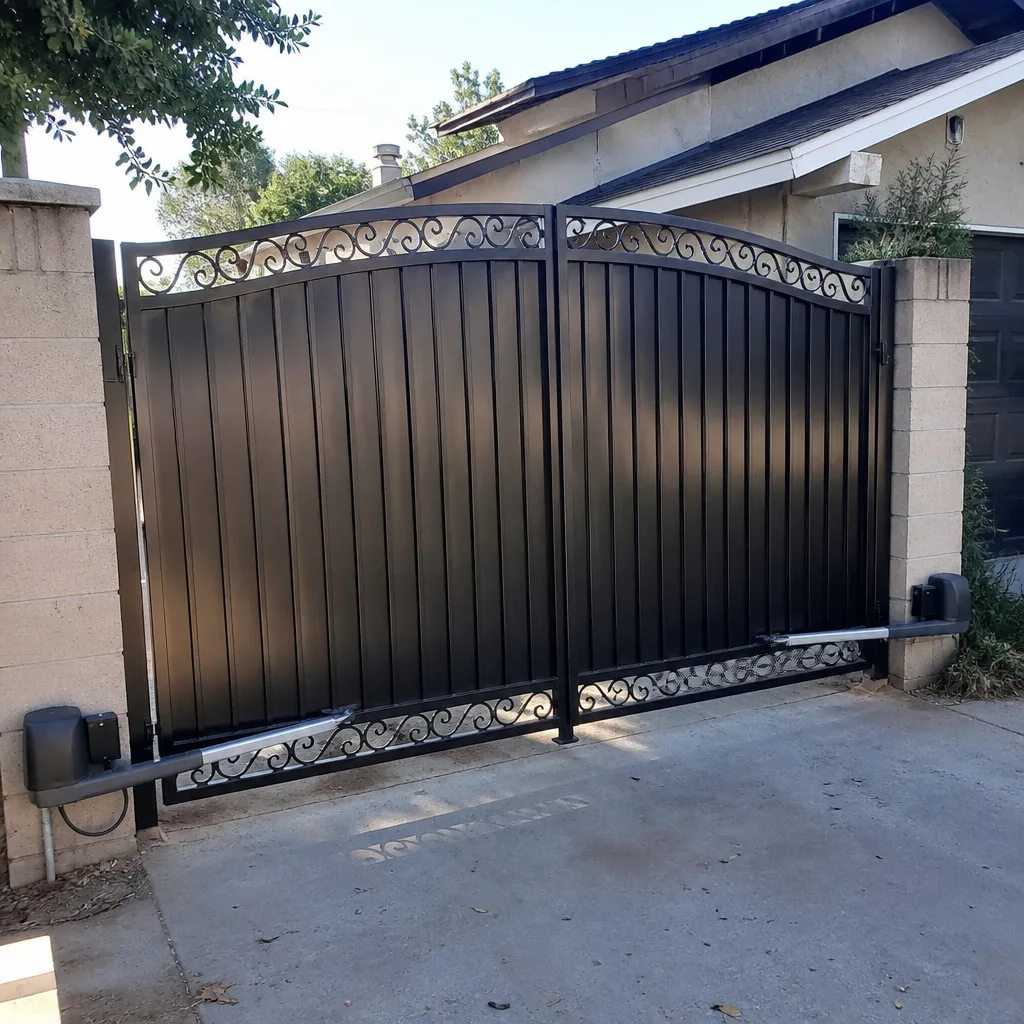 After
After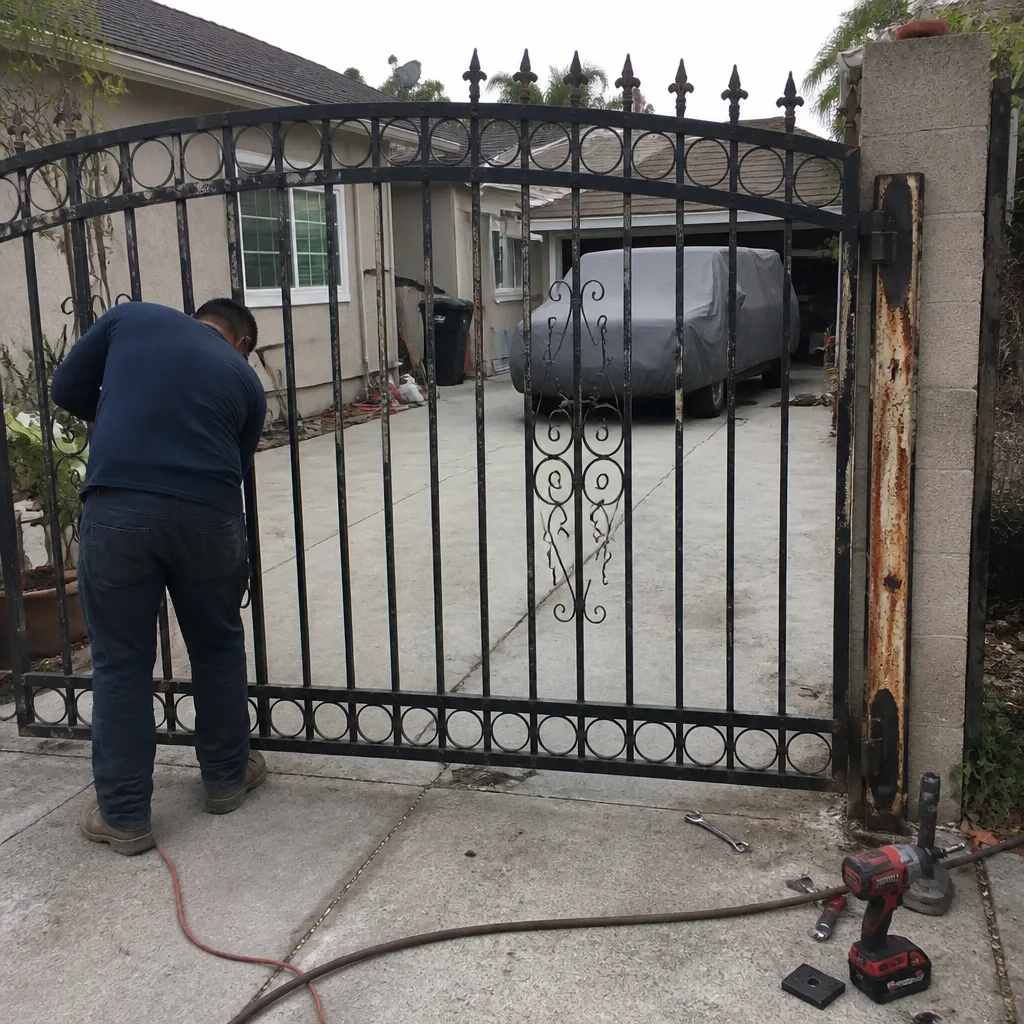 Before
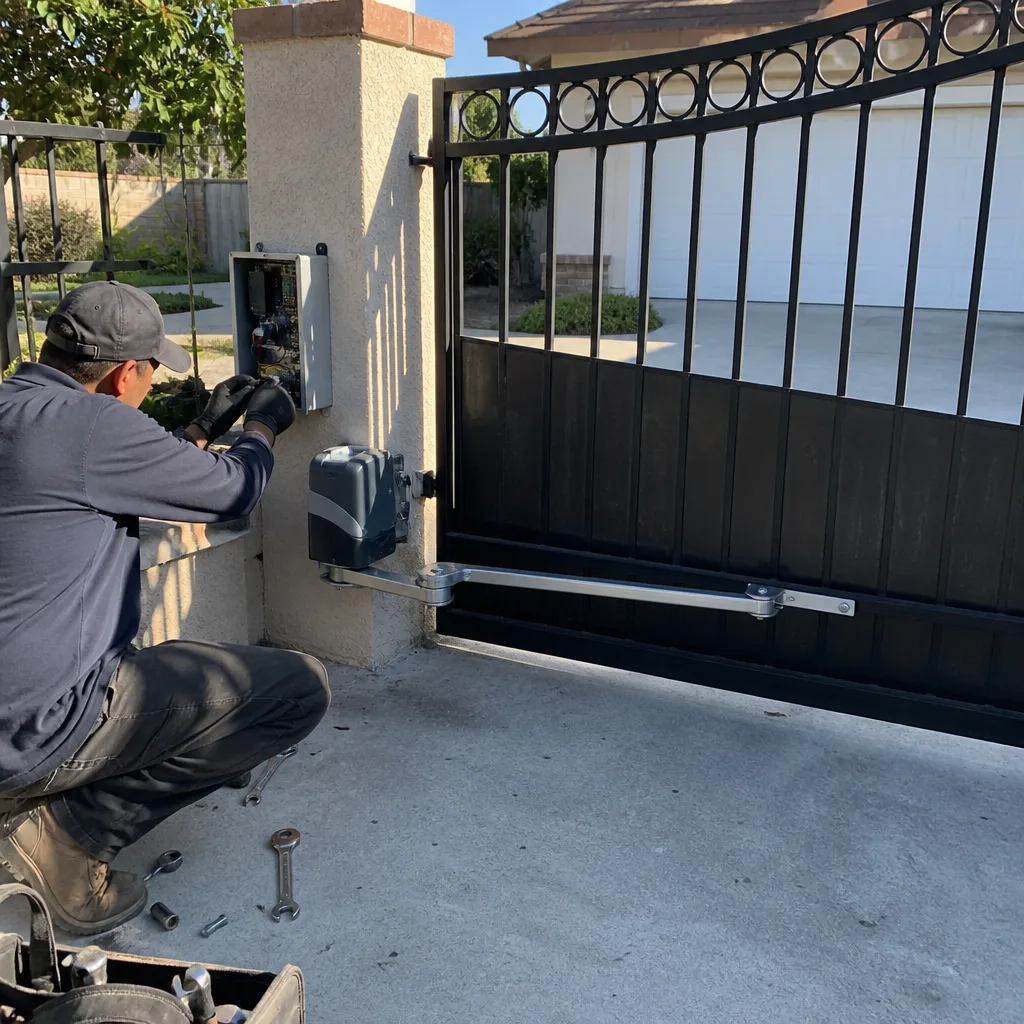 After
After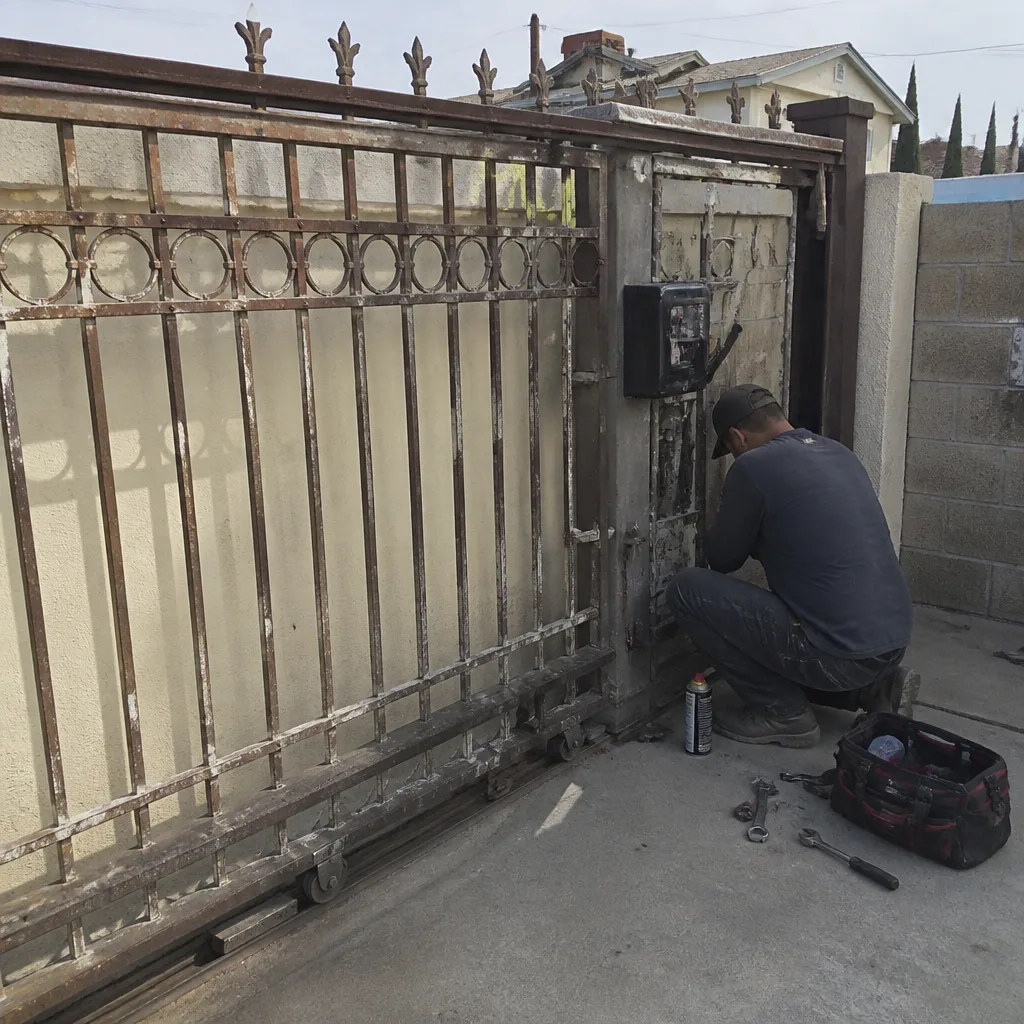 Before
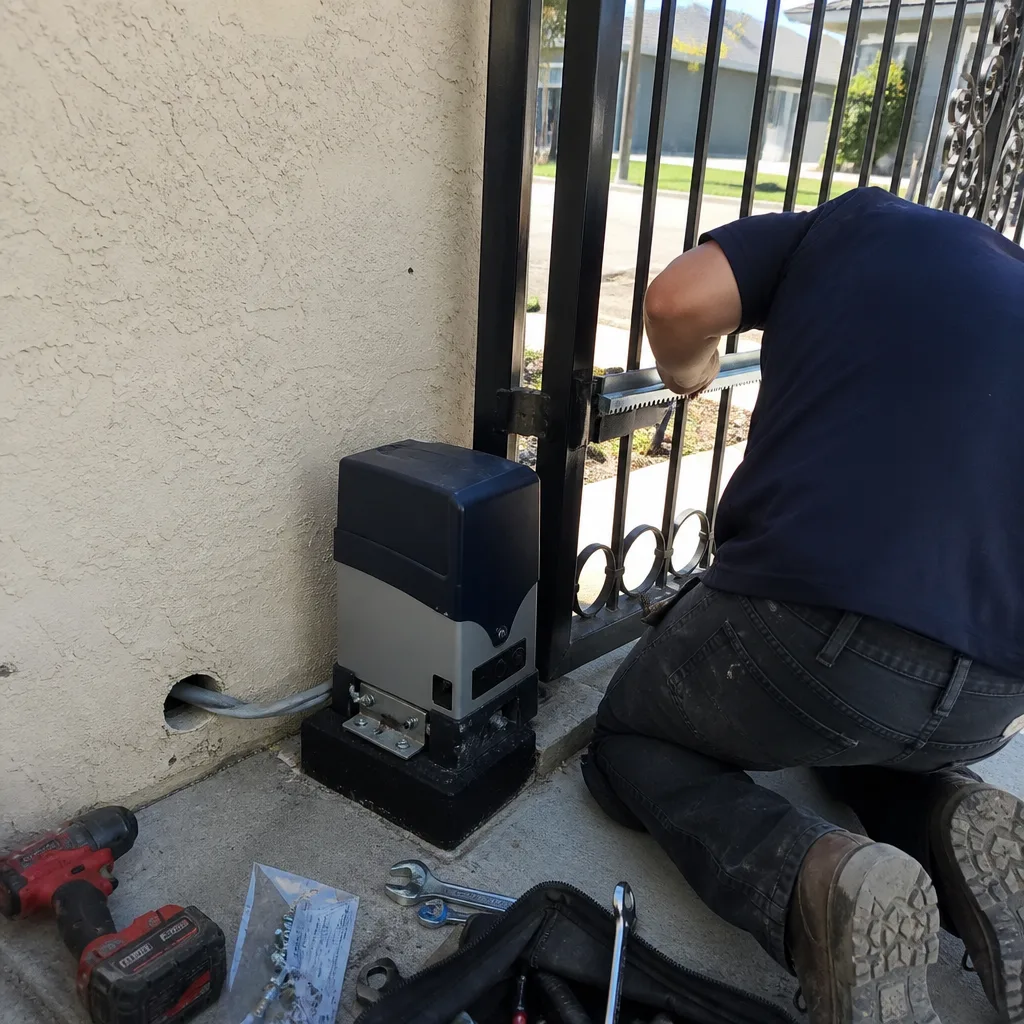 After
AfterGate Repair Maintenance Checklist for El Monte Homeowners
A driveway gate in El Monte works harder than most people realize. It opens and closes thousands of times a year in heat, wind, and the fine dust that blows through the San Gabriel Valley. Most gate failures don’t start with a bang. They start with a slight sag, a slower motor, a new squeak that gets ignored for six months. By the time a gate stops working entirely, the repair bill is almost always higher than it would have been if the problem had been caught early. This guide walks through a practical, month-by-month maintenance checklist for El Monte homeowners, what to look for, what to fix yourself, and what to leave to a professional.
Quick Answer
A driveway gate in El Monte should be inspected monthly for hinge wear, track debris, and motor strain, with a deeper tune-up twice a year. Most gates need hinge lubrication every 3 to 4 months, track cleaning every 4 to 6 weeks, and a professional check of the motor, limits, and safety sensors once a year. The most common problems we see in El Monte are rusted hinges, misaligned photo eyes from the wind, and motors worn out from fighting a gate that was never properly balanced.
Table of Contents
- Why El Monte Gates Fail Faster Than You’d Think
- The Monthly Gate Maintenance Checklist
- The Twice-a-Year Seasonal Tune-Up
- Hinges, Welds, and the Metal Parts Nobody Looks At
- Gate Motors and Openers: What Wears Out and When
- Safety Sensors, Photo Eyes, and the Wind Problem
- Common Mistakes to Avoid
- When to Call a Professional
- Frequently Asked Questions
- The Bottom Line
Why El Monte Gates Fail Faster Than You’d Think
El Monte sits in a part of the San Gabriel Valley that gets real heat between June and October, with stretches where the temperature climbs past 90 for days at a time. Metal expands in that heat. Hinges that fit tight in January fit differently in August. Add the Santa Ana winds that push through the valley in the fall, and you have a gate that gets tested by both temperature swings and sudden gusts.
Here’s the counterintuitive part. The gate itself usually isn’t the first thing to fail. The motor fails first, and it fails because it has been working against a gate that slowly fell out of alignment. A quarter-inch sag in a 300-pound gate might not look like much, but the motor feels it on every cycle. Over a year, that’s thousands of extra pounds of strain on a motor that was sized for a balanced gate. The motor burns out, the homeowner thinks they need a new opener, and the real fix was a hinge adjustment that would have cost a fraction of the price.
We’ve been repairing gates in El Monte long enough to know that most homeowners only think about their gate when it stops moving. The whole point of a maintenance checklist is to think about it for ten minutes a month so you never have to think about it for three days while it sits broken across your driveway.
The Monthly Gate Maintenance Checklist
This is the ten-minute routine. Do it on the first Saturday of the month, or tie it to something you already do, like checking the sprinklers or taking out the trash bins. The goal isn’t to fix anything. The goal is to notice when something starts changing.
- Watch one full open-and-close cycle. Stand where you can see the gate from the side. Does it move smoothly, or does it hesitate, jerk, or speed up halfway through? A gate should move at one steady speed from start to finish.
- Listen for new sounds. A low grinding sound usually means the chain or belt needs tension or the track has debris in it. A high-pitched squeal often comes from a dry bearing or a hinge that hasn’t seen grease in years. New sounds are the earliest warning sign you’ll get.
- Check the track and the ground rail. El Monte dust is fine and gritty. It settles into tracks and acts like sandpaper. Sweep out the track, and clear leaves, gravel, and anything else that doesn’t belong. A track full of debris makes the motor work harder on every cycle.
- Look at the hinges while the gate is closed. Do the two gate leaves line up at the top? If one side sits lower than the other, a hinge is wearing or a weld is starting to fail. This is the quarter-inch sag that kills motors.
- Test the safety sensors. With the gate open, wave your hand in front of each photo eye and press the remote. The gate should not close. If it does, the sensors need attention. In El Monte, wind is the usual culprit for knocking a photo eye just far enough out of alignment to stop working, and it’s a simple fix when caught early.
- Check the keypad and remote batteries. If the keypad buttons feel soft or you have to press a code twice, change the batteries before the keypad dies completely. A dead keypad on a closed gate is an inconvenience. A dead keypad on an open gate is a security problem.
If every item on this list checks out, your gate is in good shape. If two or more items don’t check out, that’s a sign the gate needs a deeper look before the problems compound.
The Twice-a-Year Seasonal Tune-Up
Twice a year, in spring and fall, give the gate a more thorough going-over. The spring tune-up prepares the gate for summer heat. The fall tune-up prepares it for the winter rain and the Santa Ana winds that hit El Monte from October through December.
Spring Tune-Up (March or April)
- Lubricate all hinge points. Use a heavy-duty lithium grease or a silicone spray made for metal-on-metal contact. Wipe off the old grease first, because old grease holds the grit and turns into grinding paste. Apply fresh grease to every pivot point, including the hinge pins, the wheel bearings if you have a rolling gate, and any moving arm on the opener.
- Check for rust. Bare metal rusts in El Monte, especially if the gate faces a sprinkler. Look for rust spots on the bottom rail, around bolt heads, and anywhere the powder coating has chipped. Light rust can be sanded and touched up with a rust-inhibiting paint. Deep rust, the kind that flakes off in layers, needs a welder’s attention before it becomes a structural problem.
- Test the manual release. Every automatic gate has a manual release lever or key. Pull it and make sure you can open the gate by hand. If there’s a power failure or a motor failure, this is the only way to get your car out. A release that’s stuck or rusted solid is a problem you want to find on a Saturday afternoon, not during an emergency.
- Check the motor’s mounting bolts. Vibration loosens bolts over time. A motor that’s even slightly loose puts stress on the drive chain and the mounting brackets. Tighten anything that gives.
Fall Tune-Up (October or November)
- Clean the photo eyes and check alignment. The Santa Ana winds in El Monte push dust and debris into the sensor lenses. Wipe them with a dry cloth and make sure both lights are on and steady. A flickering light means the alignment is barely holding, and the next windstorm will knock it out.
- Check the gate’s closing force. A gate that slams shut instead of closing smoothly has a limit switch that needs adjusting. A gate that strains to open against the wind needs the force settings dialed up slightly. Both are adjustments to the opener, not the gate itself.
- Inspect all welds and joints. Run your hand along the main welds (carefully, with gloves). Cracks in welds start small and grow with every windstorm. A crack that’s caught in October is a thirty-minute weld repair. A crack that goes unnoticed through winter can snap a hinge off the post in March.
- Clear the drain holes. Most fabricated gates have small drain holes at the bottom of the frame. If they clog with dust and leaves, water sits inside the gate frame and rusts it from the inside out. A piece of wire clears them in seconds.
Hinges, Welds, and the Metal Parts Nobody Looks At
The metal frame of a gate is the one part most homeowners never inspect, because it looks permanent. But metal is only permanent if it’s maintained. The hinges take the full weight of the gate every time it moves, and the welds hold everything together through heat, wind, and thousands of cycles.
In our experience repairing gates across El Monte, hinge wear is the single most common issue we find on older gates. A hinge pin wears down over time, especially if it was never lubricated. The gate starts to sag on that side. The sag puts more weight on the other hinges, which wear faster. Within a year, the gate is visibly crooked, the latch doesn’t line up, and the motor is fighting to push a gate that’s hanging wrong.
Here’s what to check on the metal side of the gate:
- Hinge pin play. Grab the gate near the hinge and try to lift it. If you feel movement, the pin or the bushing is worn. A quarter-inch of play at the hinge translates to several inches of sag at the far end of a 14-foot gate.
- Weld cracks. Look at every joint where two pieces of metal meet, especially on the bottom corners and anywhere a bracket attaches. Cracks begin as hairline lines in the paint. If the paint is splitting along a weld line, the weld underneath is probably starting to go.
- Latch alignment. If you have to lift the gate slightly to get the latch to catch, the hinges have already worn enough to matter. Don’t force it. A latch that needs coaxing is a hinge that needs replacing.
- Rust at the base. Gates that sit close to the ground or near sprinkler spray rust first at the bottom rail. Tap it with a wrench. If it sounds dull and flaky instead of solid, the metal is thinning from the inside.
Welding repairs on a gate are not a do-it-yourself project. A bad weld holds for a few weeks and fails catastrophically. A proper weld, done by someone who works with gate steel regularly, is as strong as the original metal. That’s the difference between a repair that lasts forty years and one that fails in a season.
Gate Motors and Openers: What Wears Out and When
The opener is the most expensive part of the system, and it’s the part that gets blamed for everything. When a gate won’t open, the homeowner assumes the motor is dead. Often, the motor is fine. It’s the gate that’s killing it.
We service gate automation from Ironworks Gate Co. home, and we’re trained on the major brands you’ll find on El Monte driveways: LiftMaster, Mighty Mule, FAAC, and BFT, among others. The brand matters less than the installation and the maintenance. A properly installed Mighty Mule opener on a balanced gate will outlast a premium LiftMaster that’s been fighting a sagging gate for two years.
What Wears Out on a Gate Opener
- Drive belts and chains. Belts stretch, chains loosen, and both need tension adjusted. A loose chain slaps against the housing and wears out the sprocket. A loose belt slips and skips teeth. Belt or chain tension should be checked at every seasonal tune-up.
- Capacitors. The capacitor is the component that gives the motor its starting jolt. When a capacitor starts to fail, the motor hums but doesn’t move, or it starts slow and gains speed. Capacitors are inexpensive to replace, but the symptom looks a lot like a dead motor. A technician can test it in minutes.
- Limit switches. These tell the gate where to stop. When they drift out of adjustment, the gate slams at the end of its travel or stops short of fully closed. The repeated slamming hammers the hinges and the motor mounts, so a bad limit switch causes damage far beyond the switch itself.
- Control boards. The circuit board is the brain of the opener. Power surges, moisture, and ants (yes, ants, they love the warmth) can take out a board. Boards are brand-specific, and each brand has its own failure patterns. That’s why we keep parts on hand for the brands we service, so a board replacement doesn’t mean two weeks of waiting on a shipped part.
If your opener is more than ten years old and the motor itself has failed, it’s usually time to replace the opener rather than rebuild it. The replacement cost for a quality opener is often less than the cost of a motor rebuild, and you get new safety features and a warranty. But if the gate itself is the problem, a new opener on an old gate just repeats the cycle. Fix the gate, then decide on the opener.
Safety Sensors, Photo Eyes, and the Wind Problem
Automatic gates are required by law to have safety sensors that prevent the gate from closing on a person, a pet, or a car. These sensors are photo eyes mounted near the bottom of the gate opening, usually one on each side. They send an invisible beam across the opening. If anything breaks the beam while the gate is closing, the gate reverses.
Photo eyes are simple devices, and most of the problems with them are simple too. But in El Monte, wind is a constant factor. The Santa Ana winds that come through the valley every fall don’t just push dust into the sensor lenses. They shake the sensor brackets. A sensor that’s been nudged one degree out of alignment stops sending the beam to its partner, and the gate stops working entirely.
Here’s the frustrating part. When a photo eye is misaligned, the gate usually refuses to close, not open. The homeowner can drive out but can’t close the gate behind them. They wedge the gate open, go to work, and spend the day with an unsecured driveway. The fix takes a technician five minutes: clean the lenses, realign the beams, tighten the brackets. But the symptom feels like a major failure.
Safety sensors are one area where we always recommend leaving repairs to someone who knows the equipment. The sensors are tied into the opener’s control board, and the settings that control sensitivity and auto-reverse are not things to guess at. A gate that doesn’t reverse when it should is dangerous. The force required to close on a child or a pet is far less than the force a gate motor can generate.
Common Mistakes to Avoid
- Ignoring a new sound for more than a week. A squeak, a grind, or a rattle is the gate telling you something is wrong. Every week you wait, the repair gets more expensive. What starts as a dry hinge becomes a worn hinge pin becomes a sagging gate becomes a burned-out motor.
- Lubricating without cleaning first. Grease attracts dust, and El Monte has plenty of dust. Fresh grease over old, gritty grease creates a grinding compound that wears metal faster than no grease at all. Always wipe the old lubricant off before applying new.
- Using WD-40 on hinges. WD-40 is a water displacer, not a lasting lubricant. It works for a day or two, then dries out and leaves the hinge worse than before. Use a proper lithium grease or a heavy-duty silicone spray designed for gate hinges.
- Adjusting the opener to fix a gate problem. When a gate sags, the opener has to work harder. It’s tempting to crank up the force setting on the opener to compensate. This works for a few weeks, then the motor burns out, and the hinge that caused the sag is still worn. Fix the gate first.
- Skipping the manual release test. Most homeowners don’t know how to open their gate manually until the power goes out and they’re stuck in the driveway. Test the manual release during your seasonal tune-up, and make sure everyone in the house knows where it is and how to use it.
- Painting over rust without treating it. Paint seals rust in, and the rust keeps eating the metal underneath. Surface rust needs to be sanded away and treated before painting. Deep rust needs to be cut out and replaced by a welder. Paint alone buys time, not a fix.
When to Call a Professional
Some gate maintenance is safely within reach of a homeowner. Sweeping the track, cleaning the photo eyes, lubricating hinges, and checking the keypad batteries are all reasonable weekend tasks. But the line between maintenance and repair is where a lot of El Monte homeowners get into trouble, usually by trying to save a service call and ending up with a worse problem than they started with.
Call a professional when the gate is sagging enough that the latch doesn’t line up, when there’s a visible crack in a weld, when the opener makes a humming sound without moving, when the gate reverses direction unexpectedly, or when the safety sensors won’t stay aligned. High-tension springs, torsion systems, and the electrical work inside the opener are genuinely dangerous, and they’re not worth guessing at. Ironworks Gate Co. offers free estimates in El Monte, call (424) 300-8579, and every job is quoted before any work begins so the price on the invoice matches the price you approved.
Frequently Asked Questions
Hinges and pivot points should be lubricated every 3 to 4 months with a heavy-duty lithium grease or silicone spray. In El Monte’s dry, dusty climate, more frequent lubrication with less grease is better than heavy applications, because excess grease attracts dust and turns abrasive. Always wipe off old grease before applying new.
Gate repair in El Monte typically ranges from $150 to $450 for common fixes like hinge replacements, sensor alignment, and limit switch adjustments. Motor replacement runs higher, usually $600 to $1,800 depending on the brand and model. A full gate replacement or custom fabrication starts around $2,500 and goes up based on size and materials. Call (424) 300-8579 for an exact quote on your specific gate, estimates are free and the price is agreed before any work starts.
Intermittent gate problems are almost always caused by a photo eye alignment issue, a loose wire connection, or a capacitor that’s starting to fail. Wind in El Monte is a common trigger, because it knocks the sensor brackets slightly out of alignment. The gate works on a calm day and refuses to close when the wind picks up. A technician can pinpoint an intermittent fault in one visit.
Replacing a gate opener motor involves high-voltage wiring, control board connections, and safety sensor calibration, and the work is dangerous if done wrong. A gate that doesn’t reverse properly after a DIY motor swap is a serious safety hazard. Trained professionals with experience on your specific opener brand can do the job correctly in a single visit, and that’s work we do every week in El Monte.
A quality gate opener that’s properly installed and maintained on a balanced gate lasts 10 to 15 years. The same opener installed on a sagging or poorly maintained gate can fail in 3 to 5 years. The gate’s condition matters more than the opener’s brand. Call (424) 300-8579 for a free assessment of your gate and opener, and we’ll tell you straight whether it needs repair or replacement.
We service nine major gate automation brands including LiftMaster, Mighty Mule, FAAC, and BFT, with parts and training for each. Whatever opener is on your El Monte driveway, the correct fix is usually made on the first visit. We quote the price before any work begins, so there are no surprises on the bill.
The Bottom Line
A gate is one of the few systems in an El Monte home that works harder than anything else and gets less attention than almost everything else. Ten minutes a month, a thorough tune-up twice a year, and a willingness to act on the first sign of trouble will keep a gate running for decades. The alternative is ignoring it until it fails, and paying the price of a neglected system all at once. The single most important habit is consistency. Watch the gate, listen to it, and when something changes, address it before it becomes a repair. Done right, and backed in writing.
Written by Victor Salinas, Owner at Ironworks Gate Co., serving El Monte since 2013.