
Last updated August 25, 2026
Free on-site gate assessment - hinges, posts, and your LiftMaster or Nice gate operator checked before anything is quoted
The assessment is free and the quote is the invoice.
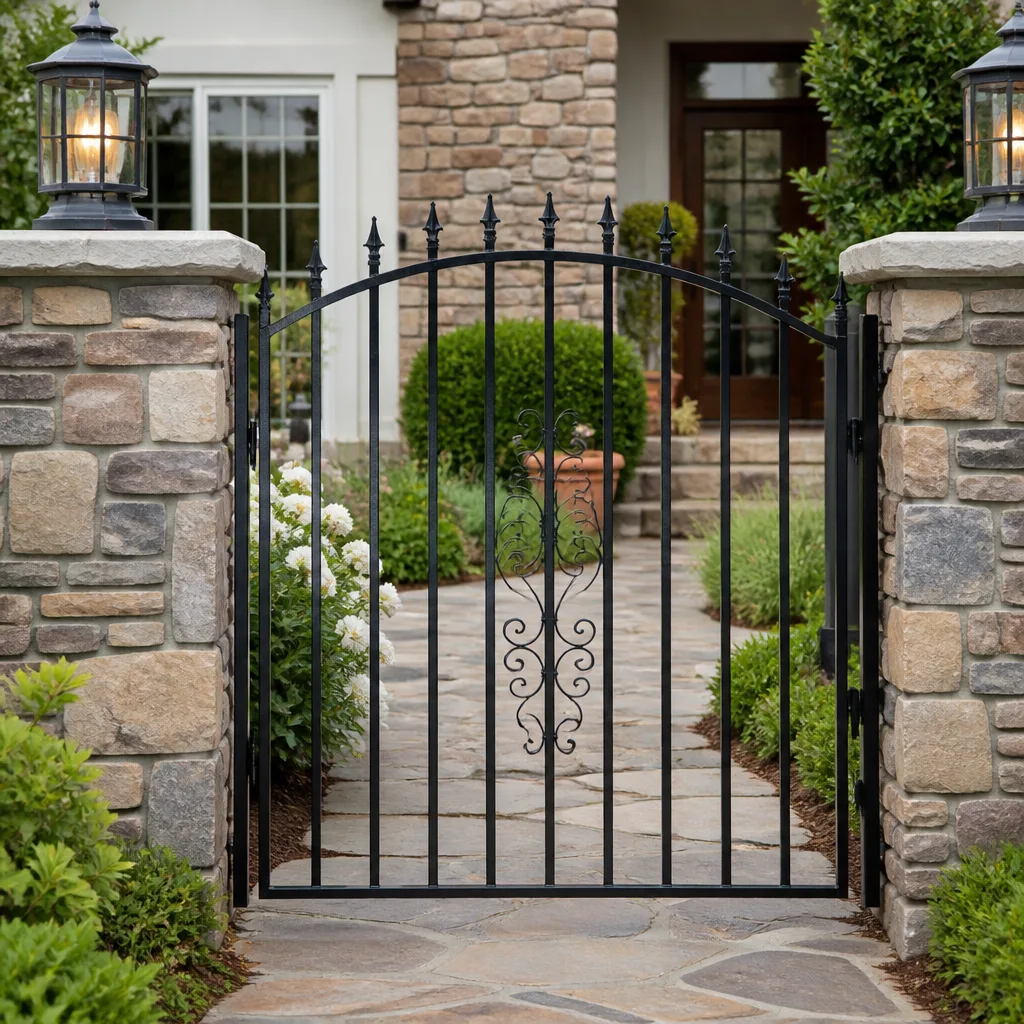
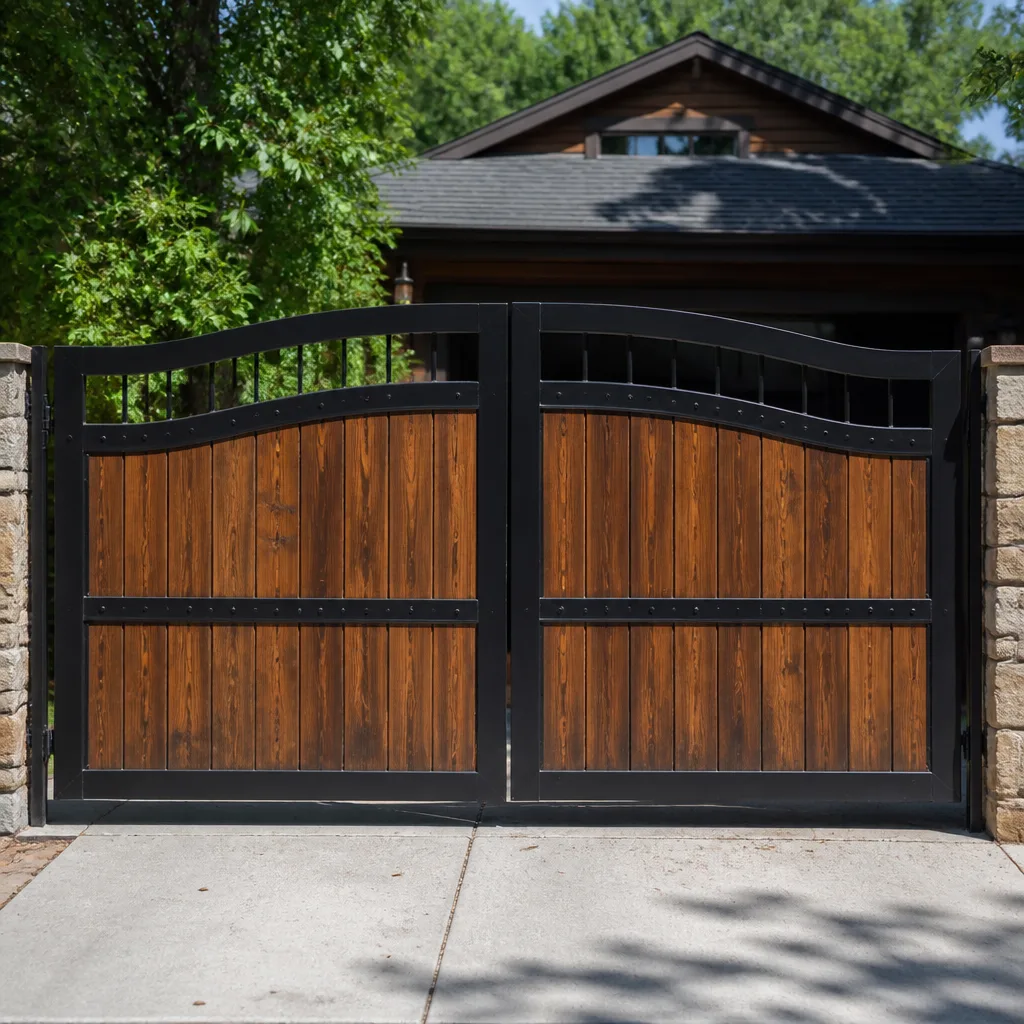
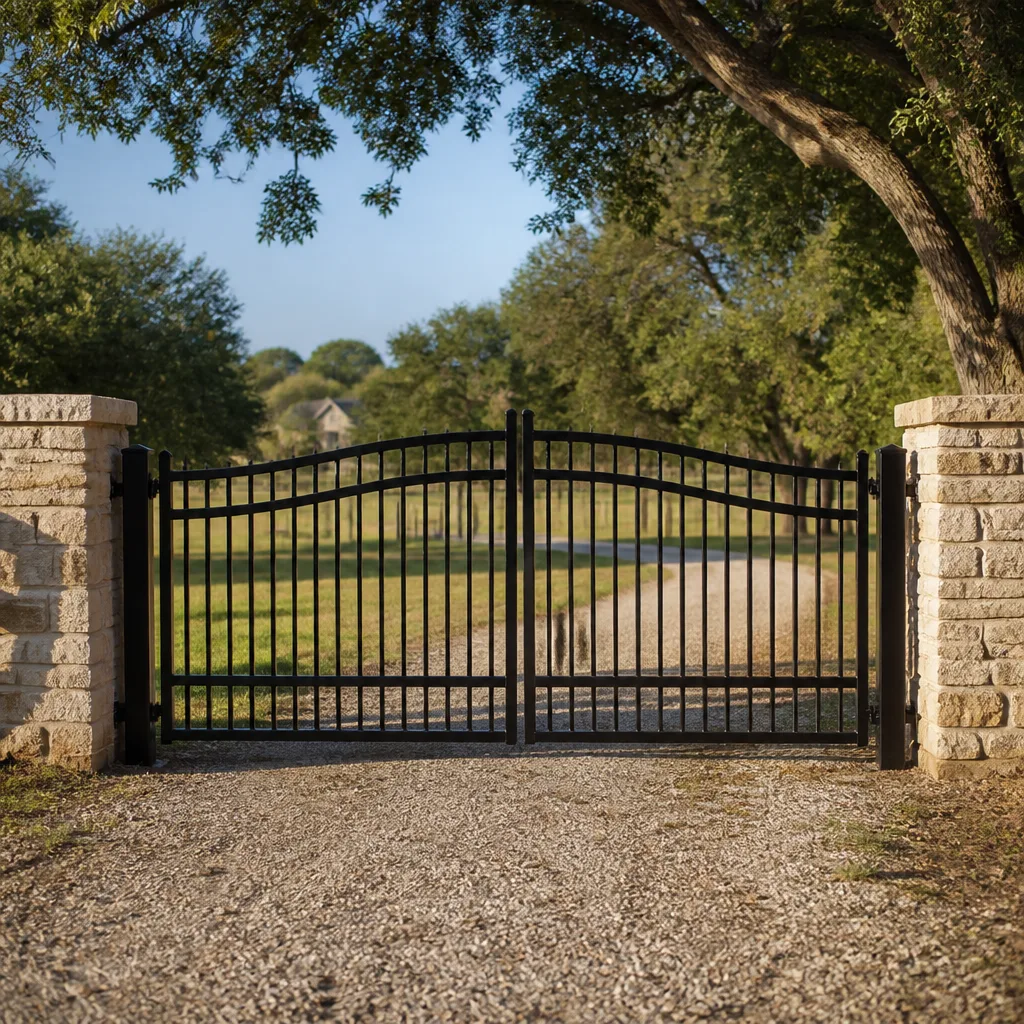
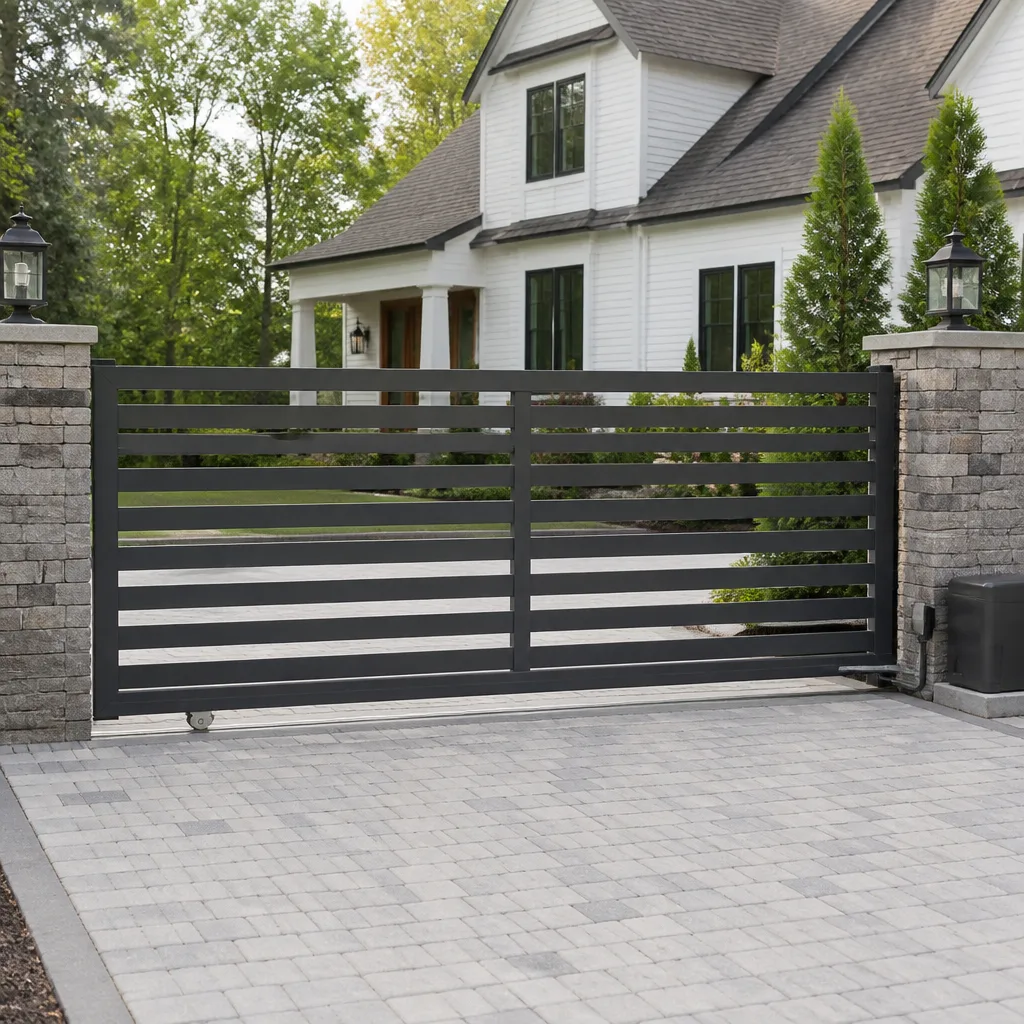
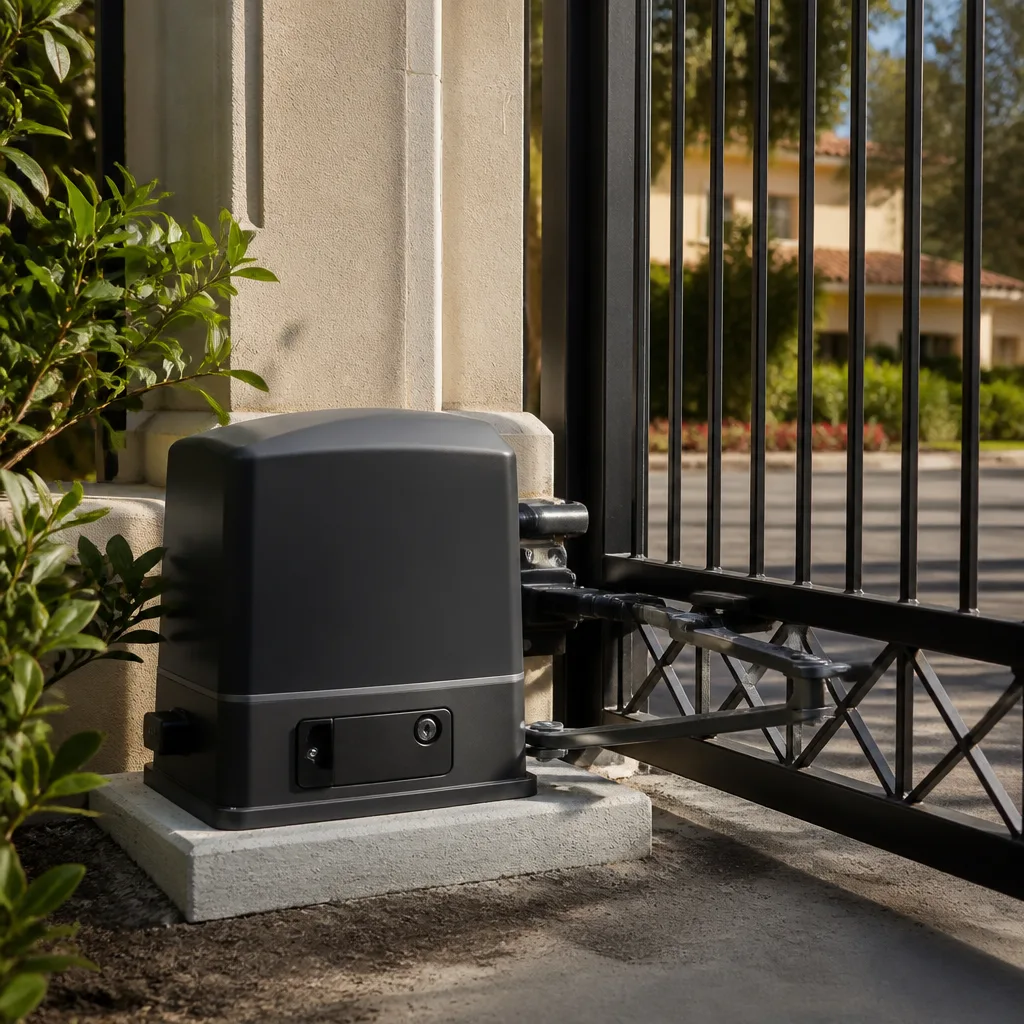
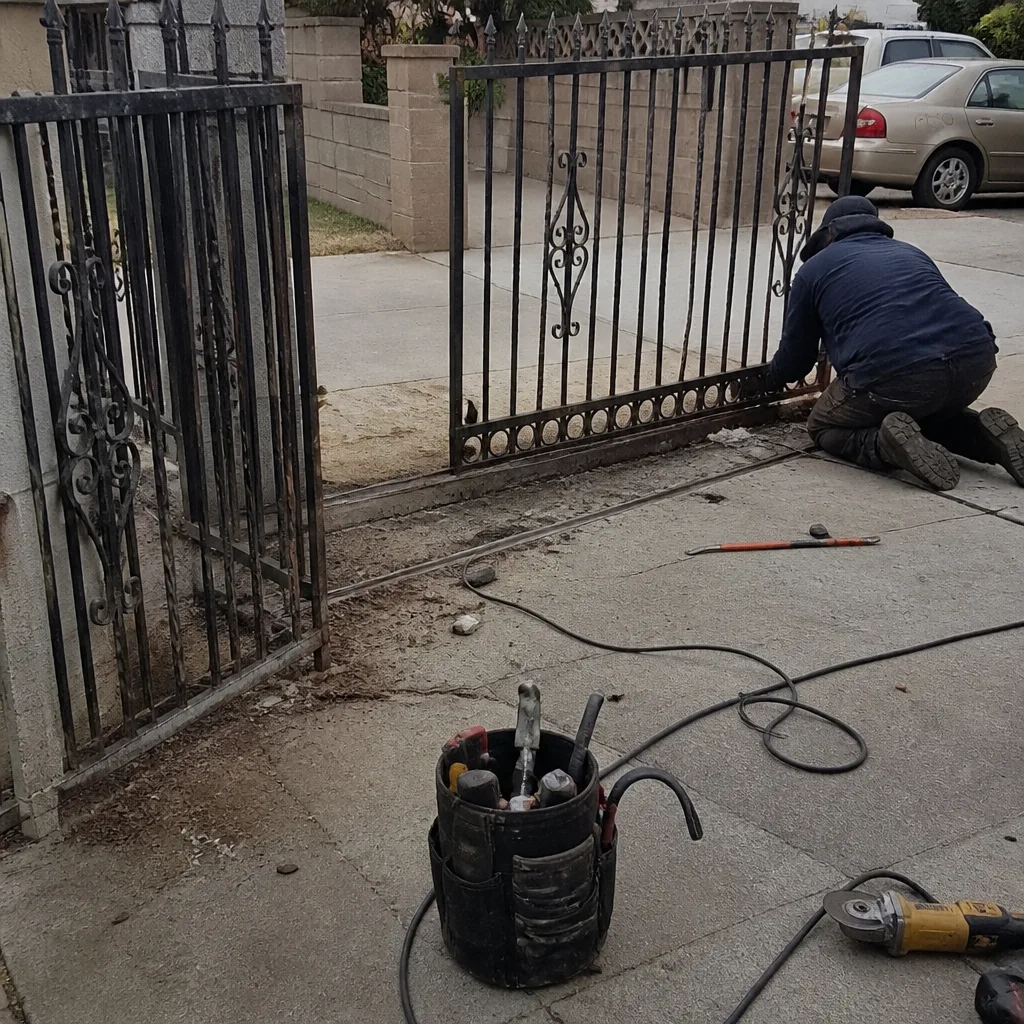 Before
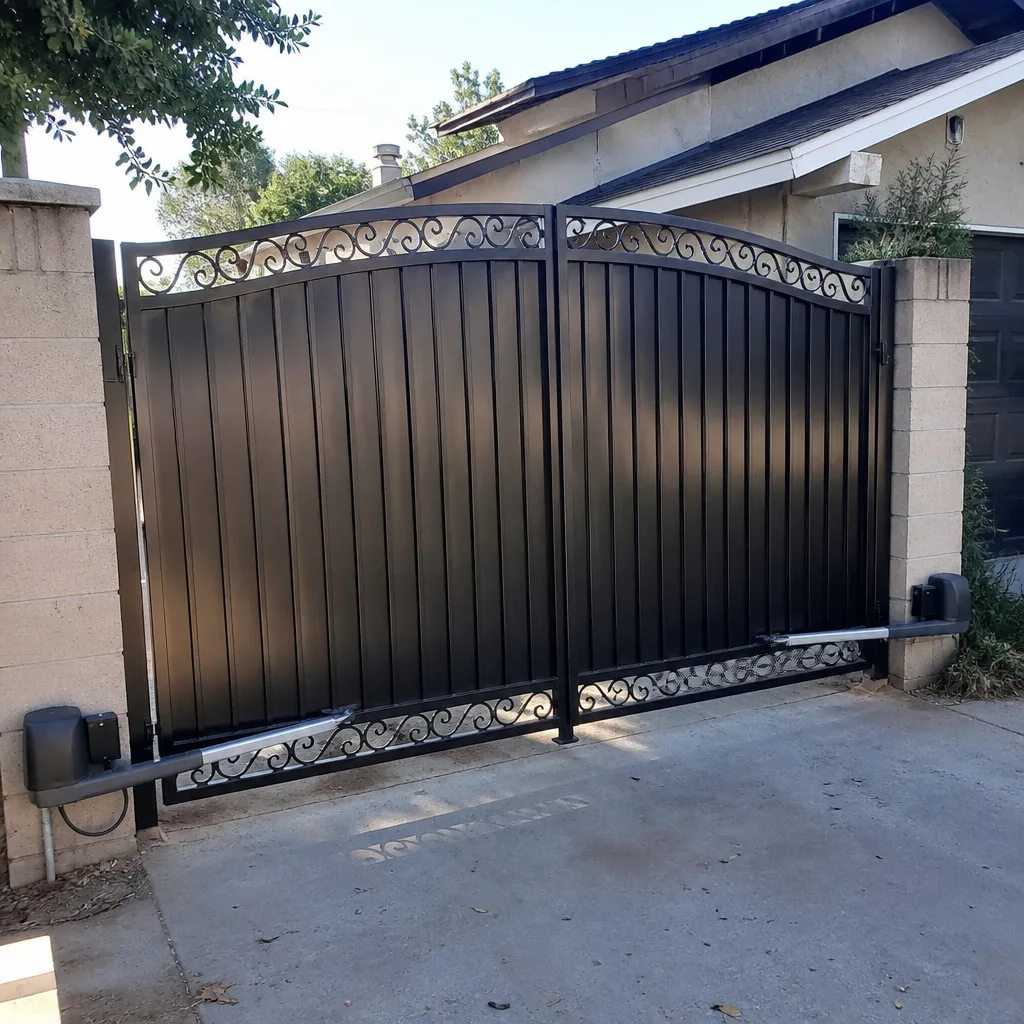 After
After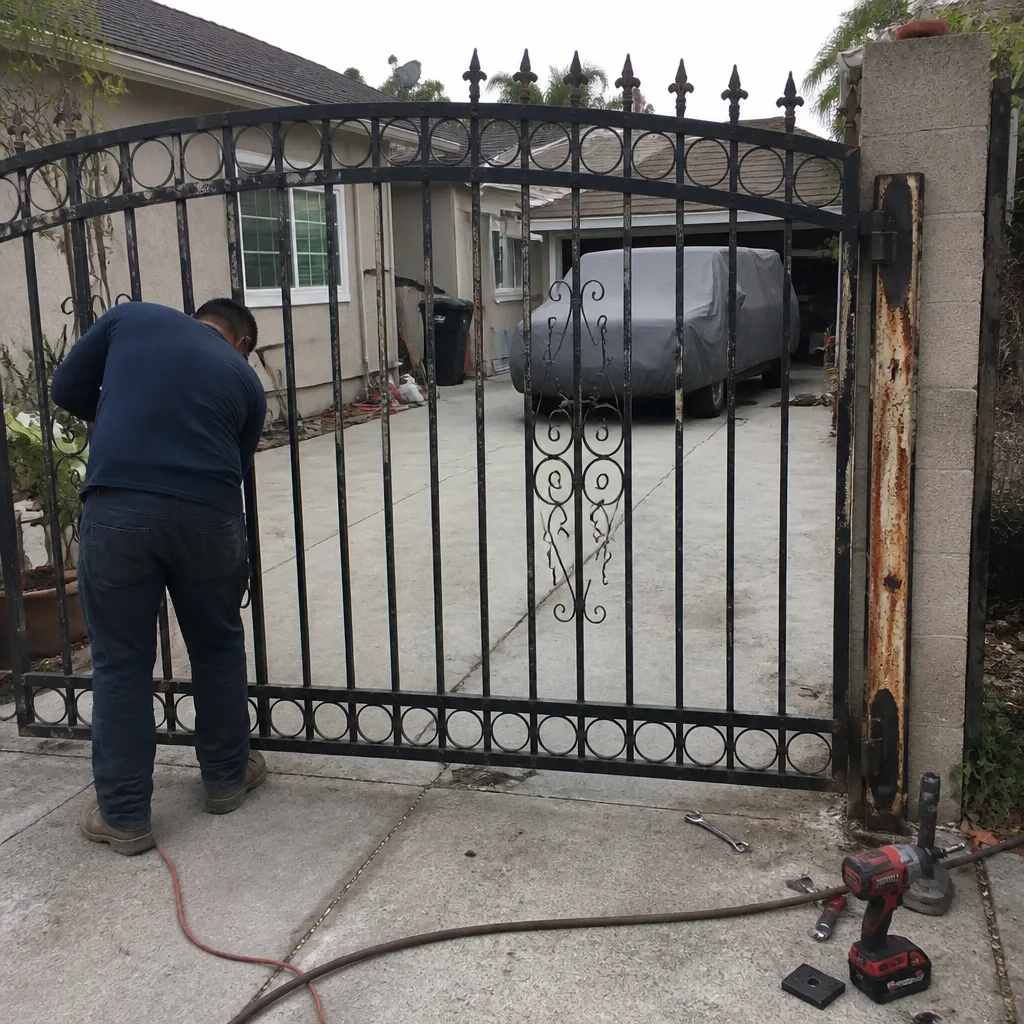 Before
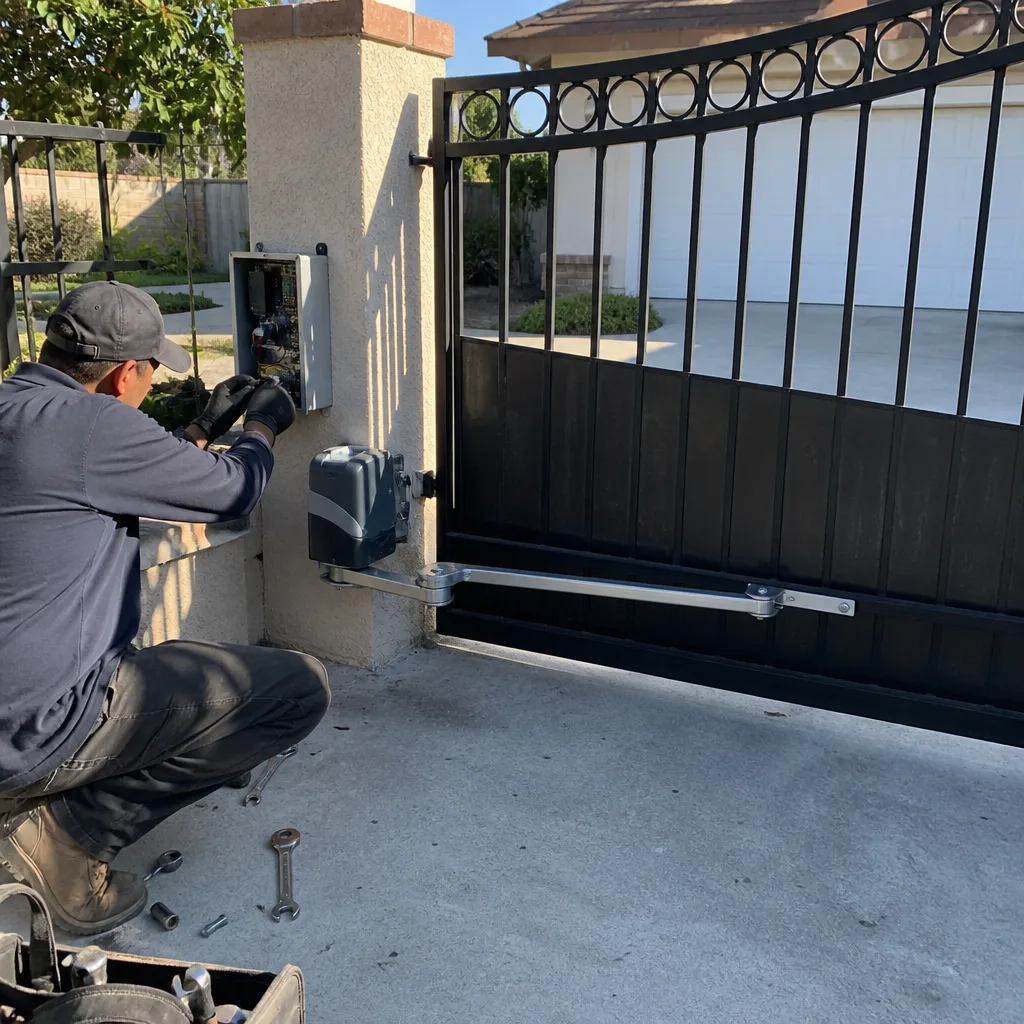 After
After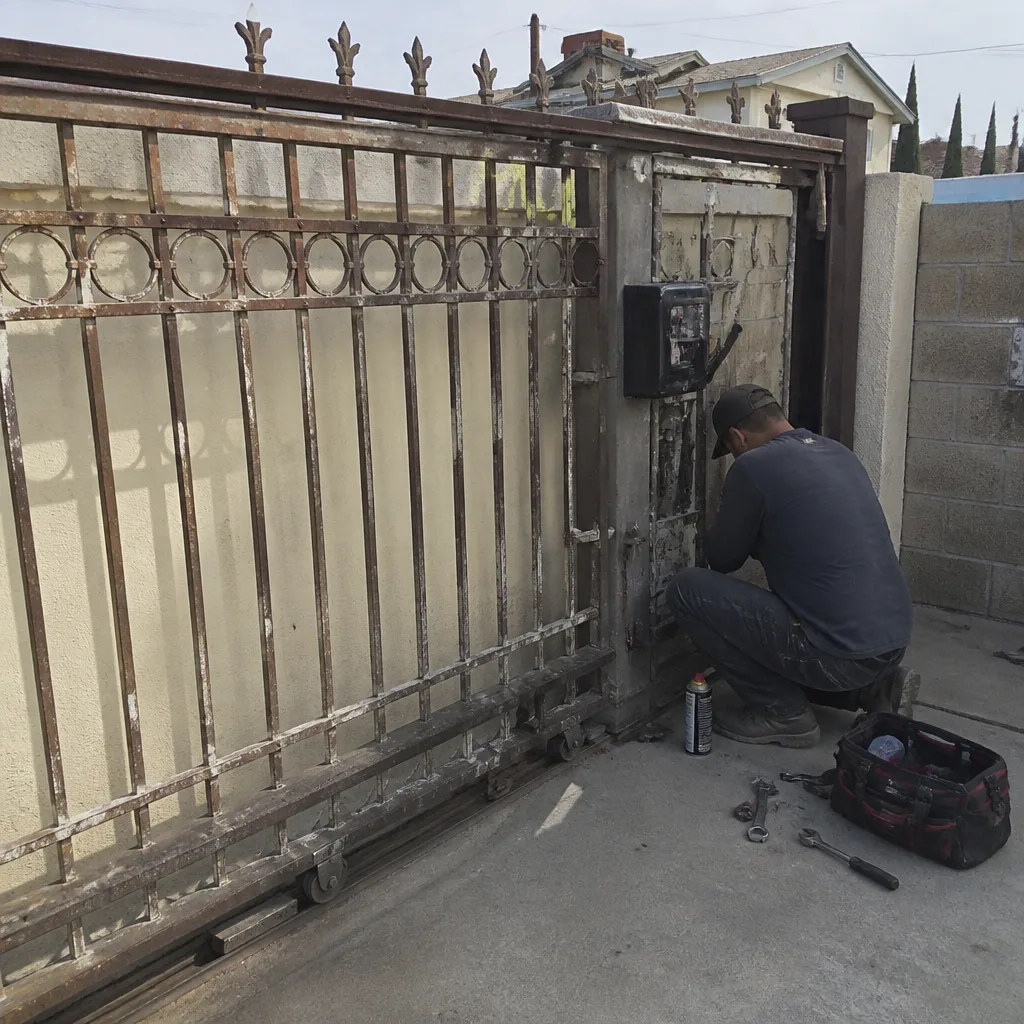 Before
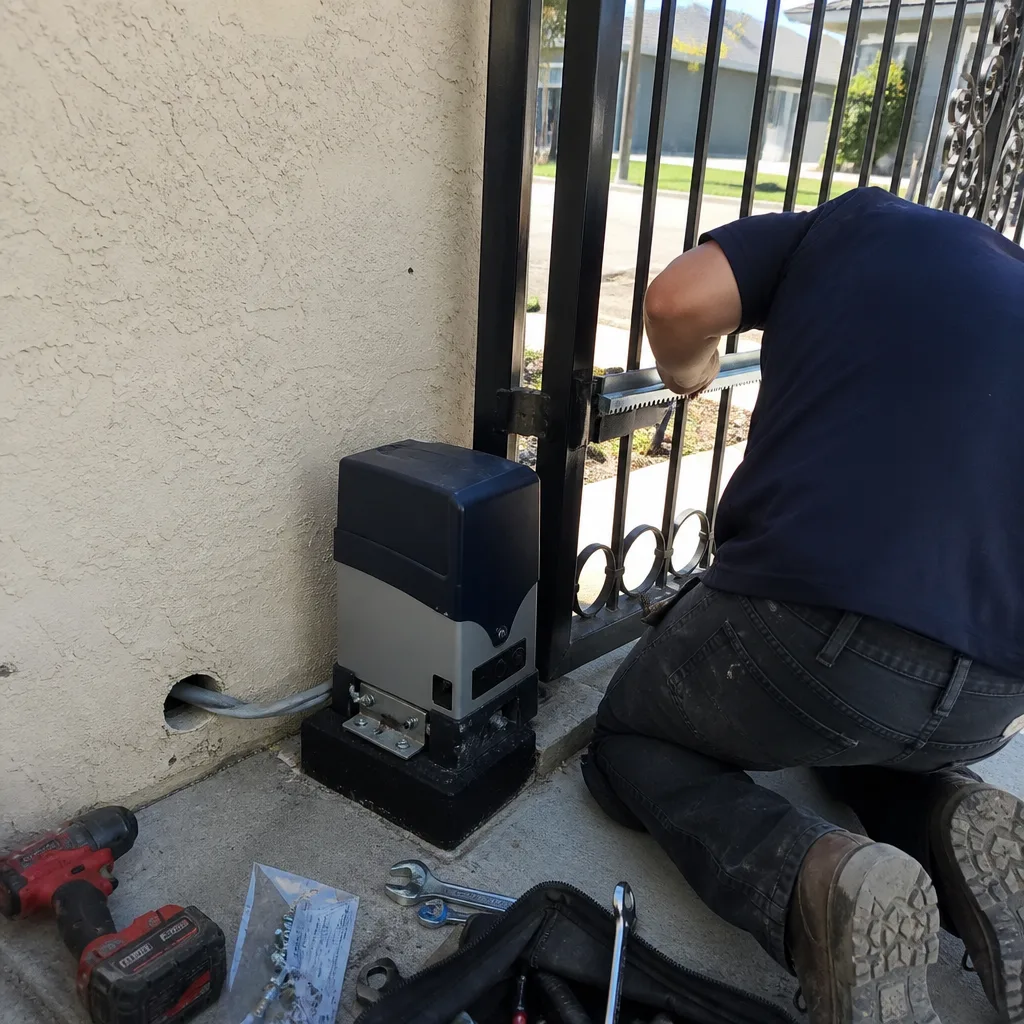 After
AfterGate Repair Warning Signs: A El Monte Homeowner’s Reference Guide
Most gate failures in El Monte don’t happen on a random Tuesday. They start months earlier, as small changes in sound, speed, or movement that get ignored because the gate still opens. Homeowners in neighborhoods like Mountain View and River East tell us the same thing after a breakdown: the gate had been acting differently for a while, but they figured it could wait. This guide walks you through what those early warnings look like, what they mean, and which ones need attention this week rather than next month. By the time you finish reading, you’ll know the difference between normal wear and a repair that’s about to become urgent.
Quick Answer
The clearest gate repair warning signs are a gate that has started moving slower than it used to, grinding or squealing sounds from the motor or hinges, sagging that leaves scrape marks on the concrete, wheels that skip or bind in the track, and a gate that stops or reverses mid-cycle. If any of these are present in El Monte, the fix is almost always cheaper this month than next month.
Table of Contents
- Sound Changes That Mean Something Is Wearing Out
- Movement Changes: Slower, Jerkier, or Stopping Mid-Cycle
- Sagging, Scraping, and Gate Alignment Problems
- Wheel and Track Wear on Sliding Gates
- Opener, Remote, and Sensor Warning Signs
- Rust and Metal Fatigue in El Monte’s Climate
- What Gate Repairs Typically Cost in El Monte
- Swing Gate Hinge and Post Problems
Sound Changes That Mean Something Is Wearing Out
A gate should make one predictable sound: the low hum of a motor doing its job. Every other sound is information. In our experience across El Monte, noise is the earliest warning sign homeowners catch, and the one most often written off as the gate just getting older.
A grinding sound from the motor area usually means the drive gear or chain is wearing against its housing. On LiftMaster and Mighty Mule openers, this is often a gear that costs under a hundred dollars to replace but will damage the motor if it’s left to grind for another season. A squealing or squeaking sound from the hinges points to dry metal-on-metal contact. Some hinges have grease fittings and can be serviced. Others are sealed and simply need replacement once they start to sing.
A rattling or banging sound while the gate moves is usually something loose: a bracket, a wheel, a bolt backing out of the track. That rattle is the gate telling you a component is about to come off. A clicking sound when you press the remote but nothing happens is a different category entirely, and we’ll get to that under opener problems.
The point is simple: a gate that changes its sound has changed what it’s doing inside. The sound is the first clue, and acting on it keeps a $200 repair from becoming a $1,200 repair.
Common sound warnings and what they usually mean
- Grinding from the motor: worn drive gear or chain tension problem
- Squealing from the hinges: dry or worn hinge bearings
- Rattling during travel: loose wheels, brackets, or track bolts
- Scraping against concrete: sagging gate or worn wheels
- Humming with no movement: motor running but drive disengaged
Movement Changes: Slower, Jerkier, or Stopping Mid-Cycle
A gate should open at the same speed every time, month after month. When El Monte homeowners notice the gate taking longer to open than it did last year, or pausing halfway through the cycle, or starting and stopping in small jerks, something has changed in the system.
Speed loss on a sliding gate is often the motor pulling against resistance: a wheel that no longer turns freely, a track that’s collected silt from the San Gabriel River basin, or a gate that’s physically heavier than the opener was sized for. In El Monte, where fine dust and morning condensation settle on everything, track debris is a factor we see constantly. Even a quarter inch of buildup changes how hard the motor works.
Jerky movement is different from slow movement. A gate that moves in fits and starts usually has an electrical or sensor issue: a photocell that’s intermittently blocked, a limit switch wearing out, or a capacitor in the motor that’s losing its ability to hold a charge. On FAAC and BFT hydraulic systems, jerky movement can also mean low fluid or air in the lines.
The gate stopping mid-cycle and then shutting down entirely is a safety-reverse or thermal-protection response. The opener is working too hard and shutting itself off to avoid damage. A homeowner can usually restart it and finish the cycle manually, but the underlying resistance is still there, and each thermal shutdown shortens the motor’s life.
- Note whether the gate is slow all the way through or only near the start or end of travel.
- Listen for a change in motor pitch while it’s struggling.
- Watch for reverse behavior after stopping: does it try again or just give up?
- If the gate stops at the same point every time, note exactly where that point is.
- Call for service with those observations ready. The details tell the technician where to look first.
Sagging, Scraping, and Gate Alignment Problems
A properly hung gate stays straight. When a gate sags, you can see it: the latch side sits lower than the hinge side, the top rail looks like it’s leaning, and there may be fresh scrape marks in an arc on the concrete. In El Monte, where many homes have decorative steel driveway gates that are twenty or thirty years old, sagging is one of the most common repair calls we get.
Sagging means the hinge system is no longer carrying the gate’s weight evenly. On a swing gate, the top hinge may be pulling out of the post, or the post itself may be leaning. Posts set in soil can shift with El Monte’s wet-dry cycles: winter rains expand the clay, summer heat shrinks it, and over a couple of decades a post can move far enough to misalign the entire gate. On a sliding gate, what looks like sagging is usually wheel wear: one wheel flattens or binds, and the gate drops a half inch on that corner and starts dragging.
The scrape marks are the clearest evidence. If you see bright metal or fresh concrete dust where the gate meets the ground, the gate has already dropped enough to make contact. Letting it scrape does more than make noise: it puts constant drag on the opener, wears the gate’s bottom rail, and can eventually catch on the driveway and stop the gate altogether.
Alignment problems also show up as a gate that no longer latches cleanly. If the latch post and the gate no longer line up by a half inch or more, something structural has shifted. That shift is almost always in the hinges, the post, or both, and it will not correct itself.
Wheel and Track Wear on Sliding Gates
Sliding gates ride on wheels, and wheels are wear items, like tires on a car. They flatten, they develop flat spots, and they eventually stop rolling and start skidding. In El Monte, where a lot of properties have rolling gates on the side of the house, wheel wear is the single most common sliding-gate failure we see.
There are two telltale signs of wheel trouble. The first is a gate that has started sliding more slowly, especially near the end of its travel. The second is a rhythmic bump or thump as the gate moves, which is usually a flat spot on one wheel passing through the track with every rotation. If you look under the gate while it moves, you may see one wheel that’s not turning at all, just scraping along the track with a polished flat edge.
Wheels sit in a track, and that track needs attention too. In a region that gets seasonal rain and then months of dry heat, track hardware rusts and loosens. Track bolts back out, the track shifts, and the gate starts binding against the side of the channel. A gate that suddenly starts to feel like it’s catching on something mid-travel is often fighting a shifted track section.
Replacing a set of sliding-gate wheels is a straightforward job for a technician with the right parts. The cost is far less than replacing an opener that burned itself out dragging a gate that would not roll. If your sliding gate has started to thump, scrape, or slow, the wheels are the first place to look.
Opener, Remote, and Sensor Warning Signs
Not every gate problem is mechanical. A good portion of the repair calls we run in El Monte are electrical: the opener, the remote, the keypad, or the safety sensors.
The most common opener warning sign is a motor that hums but does not move the gate. That usually means the drive gear inside the opener has stripped or the drive chain has broken. On LiftMaster residential openers, a stripped gear is a familiar failure after years of use, and it’s a repair we make regularly. The second most common sign is intermittent operation: the gate opens fine some days, not at all others. Intermittent electrical failures are often a capacitor failing or a control board with a cracked solder joint, and they get worse as the board heats and cools with the day’s temperatures.
Remote problems are usually simpler. A remote that only works when you’re standing close to the gate has a weakening battery or a failing receiver. A remote that does not work at all, while the keypad still opens the gate, points to the remote itself rather than the opener. If the keypad works but the remote does not, the antenna on the opener may have been damaged, or the receiver board is beginning to fail.
Safety sensor problems show up as a gate that starts to open or close and then immediately reverses. The photocell at the edge of the gate path is designed to stop the gate if anything breaks the beam. A dirty lens, a misaligned sensor, or a wire that’s working loose can all trip the reverse. If your gate suddenly starts reversing for no reason, check the sensors first, then the wiring, then call a technician.
- Motor hums, gate does not move: stripped gear or broken drive chain
- Gate works sometimes, not others: failing capacitor or control board
- Remote needs to be within a few feet: weak battery or weak receiver
- Gate reverses immediately after starting: blocked or misaligned safety sensor
- Remote and keypad both dead: blown fuse, tripped GFCI, or no power to the opener
Rust and Metal Fatigue in El Monte’s Climate
El Monte sits far enough inland that the marine layer burns off early, but close enough to the coast that winter mornings bring heavy dew. That dew settles on metal gates, and over the years it works into every joint, every weld, every bolt hole. Rust is not a cosmetic issue on a gate; it’s structural. Rust expands, rust seizes bolts, and rust eats the thickness out of steel until a hinge or a weld fails.
The first place rust appears on most El Monte gates is the bottom rail, where water collects and sits. The second place is at the hinge welds, where the paint has worn thin from movement. The third is anywhere two pieces of metal overlap: bracket joints, gate frame corners, and the underside of the track on sliding gates. These are exactly the places where a structural failure has real consequences, because a gate that breaks loose from its hinges is heavy and dangerous.
Metal fatigue shows up differently. A hairline crack at a weld or a corner joint is fatigue. A bracket that was once straight and now looks slightly bent is fatigue. These things happen slowly, under years of loading and vibration, and they’re easy to miss if you’re not looking for them. A quick walk around your gate twice a year, checking the welds and the corners, takes five minutes and catches most problems early enough for a simple repair instead of a major one.
What Gate Repairs Typically Cost in El Monte
Gate repair pricing in El Monte depends on the type of gate, the failure, and the parts involved. As a general guide, most single-issue repairs in this area fall between $150 and $600. Here’s a breakdown of common repair categories, based on what we see across the San Gabriel Valley:
- Hinge replacement on a swing gate: $180 to $420, depending on the gate’s weight and the condition of the post
- Sliding gate wheel replacement: $150 to $350 for a full set on a residential gate
- Opener drive gear replacement: $180 to $320, common on LiftMaster residential openers
- Safety sensor replacement: $90 to $180 per sensor
- Control board repair or replacement: $220 to $500 depending on brand; FAAC and BFT boards run higher
- Track repair and realignment: $200 to $450 for residential sliding gates
- Weld repair for a cracked frame or hinge: $120 to $300, depending on access and extent
These are line-item ranges, not quotes. The exact price on your gate depends on what we find when we look. At Ironworks Gate Co., the price is settled before any work starts, in writing, so there are no surprises on the bill. We’re a Ironworks Gate Co. home team that has been serving El Monte and the surrounding San Gabriel Valley for over 42 years, and we’ve always priced repair work the same way: a square deal, upfront, with the 90-Day Done Right Promise behind it. Call (424) 300-8579 for a free estimate.
Swing Gate Hinge and Post Problems
Swing gates hang entirely on their hinges and posts. Everything else on the gate can be in perfect shape, but if a hinge is failing or a post is leaning, the gate will bind, scrape, or refuse to close properly.
Hinge failures present in one of two ways. The first is sagging: the gate drops on the latch side, and the top hinge starts to show a gap between the hinge leaf and the post. The second is resistance: the gate still looks straight, but it’s harder to push by hand and the opener labors to move it. That resistance usually means a hinge bearing has seized or the hinge pin has bent under load.
Post problems are the more serious of the two. A post set in concrete that’s cracked and shifting, or a post set directly in soil that’s loosened over decades, allows the entire gate to move out of alignment. In El Monte, where many homes were built in the 1950s and 1960s, the original gate posts are often original to the house, and the concrete around them has deteriorated with time. Re-setting a post is a bigger job than replacing a hinge, and catching the post lean early can mean the difference between a day’s work and a full re-hang.
If you can move your gate more than a quarter inch by pushing on it at the latch side, the hinges or the post need attention. That play is what wears out the opener, the latch, and everything else that tries to hold the gate in position.
- Stand at the latch side of the closed gate and push gently. Does the gate move side to side?
- Look at the gap between the gate and the latch post. Is it even top to bottom?
- Inspect the hinge welds with a flashlight. Are there hairline cracks in the paint or the metal?
- Check the post itself for cracks or a visible lean. A level against the post will tell you plainly.
- Open and close the gate by hand with the opener disengaged. Does it move freely or does it bind?
Common Mistakes to Avoid
- Ignoring a new sound because the gate still opens. Every gate still opens until the day it does not. Sounds are the earliest warning, and the cheapest time to act.
- Lubricating hinges with WD-40 and calling it fixed. WD-40 cleans and loosens, but it does not lubricate. It washes out the remaining grease and the squeal returns worse within weeks.
- Adjusting the opener limit switches to fix a sagging gate. Changing the limits works around the symptom but does nothing for the sag, and the opener now over-travels into a misaligned gate.
- Welding a crack without finding why it cracked. A weld repair on a cracked hinge or frame fails again if the underlying misalignment or overload is not corrected. Welds crack for a reason.
- Replacing the remote when the problem is the opener. If a new remote does not fix the issue, the problem was never the remote. We see this often: the homeowner spends money on a remote that was not the failure.
- Waiting until the gate fails completely to call anyone. A gate that drags for six months burns out an opener that would have lasted another decade with a $200 wheel repair. The calendar is not on your side.
When to Call a Professional
Call a professional when the gate is sagging enough to scrape, when the opener hums or clicks without moving the gate, when there’s a visible crack at a weld or hinge, when the gate reverses on its own, or when a post is leaning. These are not adjustments; they are failures in progress. If you see any of these on your gate, the safest and cheapest step is to have it evaluated. Ironworks Gate Co. offers free estimates in El Monte, and a live person answers the phone 24 hours a day, 7 days a week. Call (424) 300-8579 and we’ll take a look, give you a written price before any work starts, and stand behind the repair with our 90-Day Done Right Promise.
Frequently Asked Questions
Most single-issue gate repairs in El Monte run between $150 and $600, depending on the failure. The specific price depends on what’s failed and the parts involved, and we quote every job in writing before any work begins. Call (424) 300-8579 for a free estimate on your gate, and mention the $50 Off Any Repair Over $250 offer.
Yes. Ironworks Gate Co. serves El Monte and the surrounding San Gabriel Valley, and we complete most gate repairs in a single visit. A live person answers the phone 24 hours a day, 7 days a week, so you’ll know exactly when we’ll be there. Call (424) 300-8579.
No. A grinding sound from the motor area usually means the drive gear is wearing, and every cycle wears it further. What’s a gear replacement this week can become a motor replacement next month. In El Monte, we see this most often on LiftMaster residential openers that have been in service for years.
Every completed repair and installation from Ironworks Gate Co. is covered by our 90-Day Done Right Promise. If anything is not right within 90 days, we come back and make it right at no charge. No paperwork to file, no argument to make, no exceptions.
Yes. We’re trained and equipped on nine gate-automation brands, including Mighty Mule, FAAC, LiftMaster, and BFT, so the fix is correct the first time, whatever opener is on the driveway. Call (424) 300-8579 and tell us what brand you have.
It depends on how far the post has moved and the condition of the concrete or soil around it. Some leaning posts can be re-set and stabilized; others need replacement. The only way to know is to have it looked at. Ironworks Gate Co. offers a free second opinion on any written estimate in El Monte.
The Bottom Line
Gates are simple machines, and they tell you when they’re in trouble. A new sound, a slower cycle, scrape marks on the concrete, a wheel that skips, a remote that only works up close: each of these is a warning sign that something specific is wearing out, and each is cheaper to address now than to ignore. In El Monte’s climate, with its dew-soaked mornings and hard dry summers, rust and metal fatigue are constants, not surprises. Victor Salinas and the team at Ironworks Gate Co. have been keeping El Monte gates opening and closing for over 42 years. We quote every repair in writing before the work starts, we finish most jobs in one visit, and we back every job with the 90-Day Done Right Promise. If your gate has been trying to tell you something, call (424) 300-8579 and we’ll listen with you.
Written by Victor Salinas, Owner at Ironworks Gate Co., serving El Monte since 2013.